Here in southern Arizona, we are going through a brutally hot summer. Temps climb to over 110 degrees Fahrenheit, and the nights bring no relief. In fact, my normally hardy autumn sages (Salvia greggii) have already turned brown. But, are they dead, or have my autumn sages gone dormant for the summer? Here’s what I discovered about plant summer dormancy!
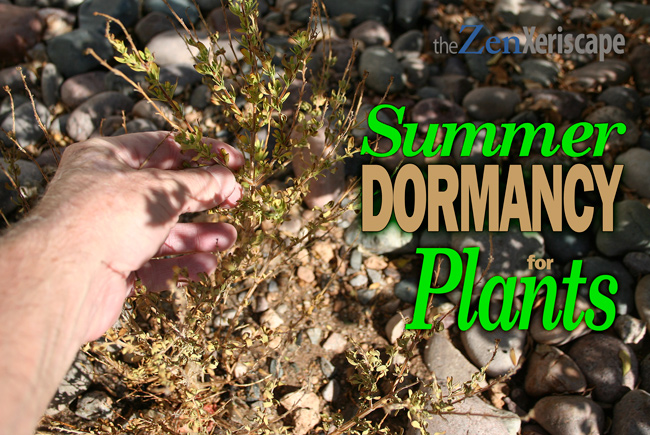
usually because of extreme heat or drought,
the leaves can turn brown and
the plant will stop growing.
Photo by Doug Martin
Plant summer dormancy
What is summer dormancy for plants?
—Plants stop flowering during summer dormancy
Summer dormancy helps plants survive extremely hot and dry weather. Here in the southwestern United States, where extremely hot summer temps are normal, many plants stop flowering to conserve energy. This dormancy might be enough to help them survive the heat and drought-conditions.
—Some plants drop their leaves
While not flowering might be enough to help some plants survive, other plants conserve energy by limiting and stopping the process of photosynthesis. That’s the process that helps plants convert sunlight, water, and carbon dioxide in our atmosphere into energy.
When plants stop photosynthesizing, their leaves turn brown. This is part of their summer dormancy. It’s like they hibernate to survive, but they are doing it during the summer instead of the winter.
Fortunately, their dry leaves will drop to the ground around the plant, and form a beneficial layer of mulch. The mulch will then shield the roots from the extreme summer heat, and will also provide a protective layer around the roots during winter freezes.
Types of plants that go dormant in the summer
Some common southwestern plants that often shed their leaves during their summer dormancy are the ocotillo, the brittlebush, and the desert marigold.
In addition, the blue palo verde, a common desert and landscape tree that grows here in the southwest, might shed its leaves during an especially hot and dry summer. Other trees like the mesquite might retains its leaves, but the leaves will fold up so less of its surface area is exposed to the harsh elements.
—Autumn sage summer dormancy
The plants in my landscape that have suffered the most are my autumn sages. These plants have completely stopped flowering, and their leaves have turned a crispy brown.
Fortunately, one of my autumn sages is partially protected by the shade, and the shaded part has still retained its green leaves. However, even the green leaves are suffering, and might eventually turn brown before this extreme summer heat ends.
Plant summer dormancy
Symptoms of plant summer dormancy
In general, there are a few, easy-to-recognize symptoms of an otherwise healthy plant that has gone dormant.
—Plant stops flowering
In order to conserve energy and nutrients, a plant that has gone dormant in the summer will stop flowering. After all, it does take a lot of energy for a plant to produce a flower, wait for it to be pollinated, and then produce its fruit. So, that plant will stop flowering to survive!
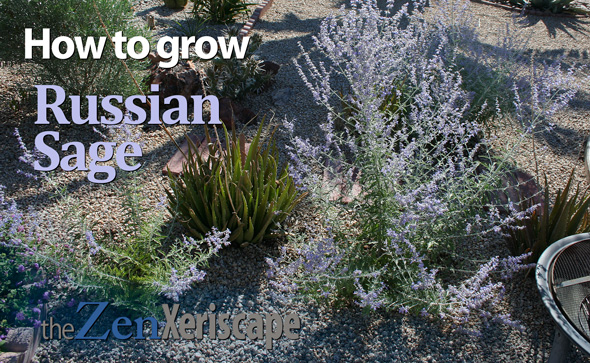
In my landscape, my autumn sages have stopped flowering, as well as my orange jubilees. In addition, my Russian sages have stopped flowering, but remarkably they have still retained their small green leaves! I was surprised that my Russian sages have continued looking pretty good in this harsh climate.
Even my aloe veras have entered summer dormancy. Their beautiful green leaves are now mostly gone, and they have now turned an unattractive brown. Of course, they only flower in the spring and flower, so of course, they are not producing flowers now!
In addition, none of my ocotillos are flowering right now (your experience might be different), and my vitex or chaste trees have continued flowering, but at a much slower pace—I’m talking about only one or two new flowers per tree.
—Plant leaves turn brown and drop
More extreme examples of summer dormancy in plants are when the leaves turn brown and drop off the plant. To me, it looks like the plants have died. That’s especially true of my autumn sages—some of them look dead.
—Plant stops growing
In order to conserve energy, most summer dormant plants will stop growing. That’s true of my autumn sages, my orange jubilees, as well as my vitex trees. They have all stopped sending out new growth.
—Plant leaves turn yellow
Some drought-tolerant plants might retain their leaves, but they might turn yellow. That happens every summer with my Weber’s agaves, as well as my butterfly agaves.
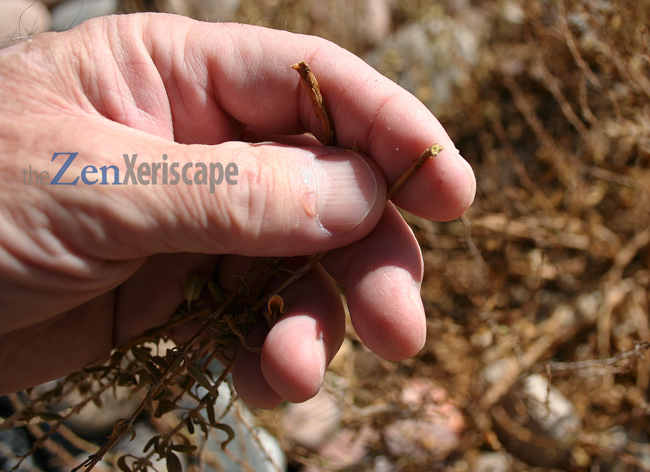
extreme summer temps, break off a stem.
If it’s still alive, the center of the stem
will still be green.
Photo by Doug Martin
What to do if your plant enters into summer dormancy
If your normally drought- and heat-tolerant plants goes dormant in the summer, here are a few general guidelines to keep them alive.
—Don’t water too much
During summer dormancy, don’t water too much in the hopes that your dormant plants will turn green again. In fact, watering too much might possibly kill those slumbering plants with root rot.
—No supplemental water for my agaves
To help my agaves survive the summer extremes, I stop watering them completely. Despite my Weber’s agaves slightly yellow leaves, I resist the urge to water. No supplemental water for them. In the past, I’ve made that mistake, and the extra water killed my most beloved agaves.
—No water for ocotillos and cacti
I also completely stop any supplemental watering of my ocotillos and my barrel cactus plants. Those plants could quickly rot with too much water during their summer dormancy.
—Autumn sage, orange jubilee water schedule
During summer dormancy, I continue to water my autumn sages, orange jubilees, Russian sages, and other bushy shrubs once a week. However, I water them deeply, and try to keep excess water away from the base of the plants.
How to care for plants that are dormant
—Stop fertilizing
In all cases, stop fertilizing plants that show signs of being dormant in the summer.
—Don’t water extra
Too much water can quickly rot an otherwise healthy plant that has gone dormant for the summer. Resist the urge (which we all experience), and do not give extra water to those dormant plants.
However, for autumn sages, Baja fairy dusters, desert marigolds, and other similar plants, do water deeply, but not too often—try to mimic the amount of water they would receive in their natural habitat.
—Continue to weed
Weeds or other unwanted plants will steal water and nutrients from your plants that have gone dormant for the summer. Continue to remove unwanted weeds, and be sure to remove the roots, as well.
How to tell when dormancy phase ends for plants
As the summer temperatures begin to moderate, and nighttime temperatures dip to more comfortable levels, your plants that have gone dormant will slowly begin to wake up.
Gradually, you’ll see new leaf growth followed by new stem growth. Eventually, you might see new flowers, especially on the autumn sages, orange jubilees, Baja fairy dusters, and Russian sages.
Then, you can return to your normal watering and fertilizing schedule (depending on your hardiness zone).
TAKEAWAYS:
Plant summer dormancy
Plants that are dormant for the summer might look dead. But, don’t throw them away! Hopefully, they are only dormant, or hibernating for the summer.
Symptoms of plant summer dormancy:
—Leaves turn brown
—Leaves drop off
—Stops flowering
—No new growth
The end of summer dormancy
Once the extremely hot summer temperatures have moderated, plants will slowly awaken from their summer dormancy. They will grow new leaves, and new stems. Afterwards, they will grow flowers and fruit (depending on your hardiness zone).
Thanks to their survival technique of going dormant for the summer, your plants can survive those periods of extreme heat and drought. Then, we can enjoy another year of beautiful growth from our beloved xeriscape plants!
Thanks for reading our plant summer dormancy post. If your plants are suffering now in our hot southwestern summer, please share your experiences in the comments section below!
Content and photos by Doug Martin and The Zen Xeriscape