When I lived in Las Cruces, New Mexico, I had a windmill palm in my landscape. I loved that palm tree, and wish I had a couple of them in my southern Arizona landscape today. But, I don’t. However, I’ll keep checking local garden centers for a nice specimen. The windmill palm has so many pros, and very few cons. Here are the windmill palm pros and cons.
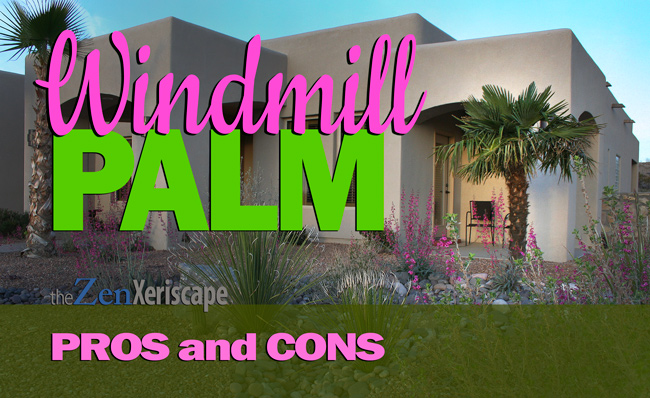
adds tropical vibes to an arid landscape.
Photo by Doug Martin
Windmill palm pros and cons
Windmill palm description
But first, let’s describe the windmill palm tree.
Windmill palm tree height
The windmill palm is a moderately sized palm tree. It is typically 10-to-20-feet tall in most landscapes. But, while I’ve never seen a windmill palm this tall, it can get as tall as 30-feet.
In colder regions, you should expect less vibrant growth from your windmill palm. However, in warmer climates, this palm tree might grow 6-to-12 inches per year.
Trunk thickness
This palm tree has a relatively thin trunk. In a mature windmill palm, the trunk might measure 10-to-14 inches in diameter.
Single trunk
Unlike the Mediterranean fan palm, the windmill palm is has a single trunk. The makes it a more symmetrical palm tree, which makes it similar to the Mexican blue palm‘s growth habit.
Palm fronds
Just like the Mediterranean fan palm, the windmill palm gets a large crown of green fronds. The fronds, or leaves, densely cover the crown of this tree with a lush green hue, making it appear very tropical, lush, and inviting.
When mature, the crown of fan-shaped fronds can be 5-to-10 feet wide.
Windmill palm flowers
Similar to many palm trees, including the Canary Island date palm, the windmill palm has either a male or female gender (dioecious palm). The male tree grows almost 3-foot long stalks, and they contain thousands of small, yellow flowers.
However, I believe my windmill palm was a female. It also produces long, 2-to-3 foot long stalks of flowers. They arch over and hang down, and are covered with flowers that had a greener hue.
After pollination, the female’s flowers will wilt and then produce dark-colored berries or fruits. While the wildlife in your neighborhood might like the berries, they are inedible for humans.
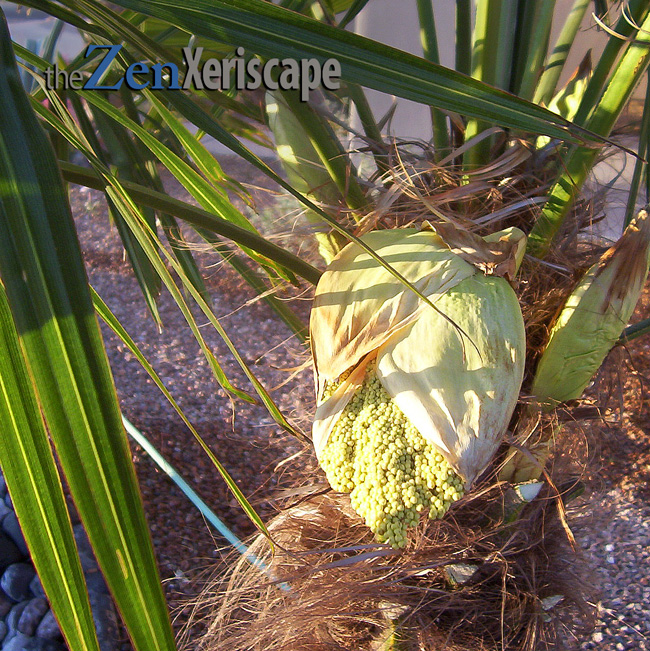
emerge from the trunk. Each branch carries
thousands of small flowers arranged in clusters.
Photo by Doug Martin
Overall appearance of windmill palm
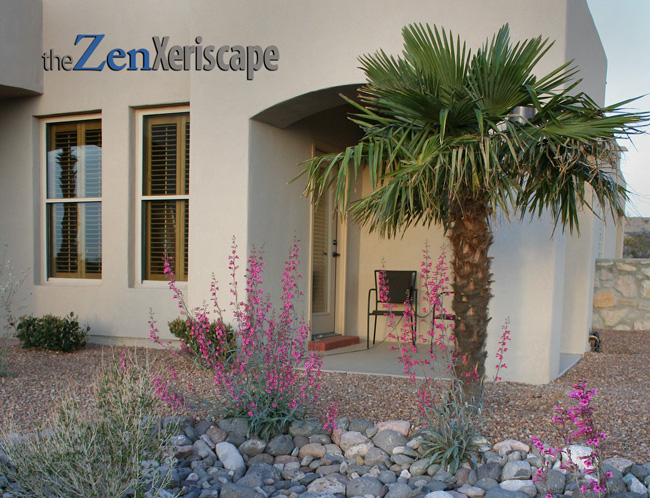
Overall, the windmill palm added a year-round, tropical appearance to my landscape. It’s vibrantly green crown of fronds added a lush color, especially in what might be an otherwise drab winter landscape.
Windmill palm pros and cons
PROS:
Windmill palm is cold tolerant
Unlike many more tropical palm trees, the windmill palm can tolerate below-freezing temperatures. In fact, my southern New Mexico windmill palm survived many single-digit winter nights without any damage.
Fortunately, the windmill palm tree can usually survive year-round in USDA hardiness zones from 6-to-11. However, if you live in a colder hardiness zone that experiences some longer nights-and-days of continuous single digit temperatures, be ready to provide some protection.
For instance, you could add extra mulch around the base of the tree (but keep the mulch away from the trunk). You could also cover the tree with frost cloths, or old blankets, or even use burlap bags to cover the crown and wrap the trunk.
Heat tolerant
Because the windmill palm can thrive in USDA hardiness zones of 6-to-11, it can tolerate a wide fluctuation of temperatures. In addition to its tolerance of cold weather, this tough palm seems to thrive in our extremely hot summer temps in the southwestern United States.
In southern New Mexico, my windmill palm stayed a lush green even in temperatures of 110 degrees F. And, it will also thrive in our southwestern Arizona summers of extreme heat. But, at least for this palm, afternoon sun might be a welcome relief for 120 degrees F or more.
Low maintenance
My windmill palm was mostly a low-maintenance tree. Of course, I did prune off some of the lower fronds as they dried up. In addition, I pruned the fruit, because the local pests tended to value their nutritional value.
But, unlike the Mediterranean fan palm, the windmill palm does not grow new branches around the base. It is a single stem palm tree, which I really like.
Drought tolerant
Just like many palm trees, the windmill palm is tolerant of drought conditions. However, you will get lusher and greener foliage if you do add supplemental irrigation.
If you do add supplemental water, be sure to water away from the base of the tree. And, water deeply so this tree can develop an extensive root system.
Windmill palm adds a tropical ambience
Even if you live in an arid environment like the southwestern United States, the windmill palm can help add a tropical ambience. Fortunately, that tropical feel and vibe does not have to use extra water. This palm tree can remain lush and green with only periodic waterings.
To enjoy the tropical aura, pull up some chairs under your windmill palm’s crown, and then celebrate! Enhance this palm’s tropical vibe with a margarita, mai tai, or even an iced coffee.
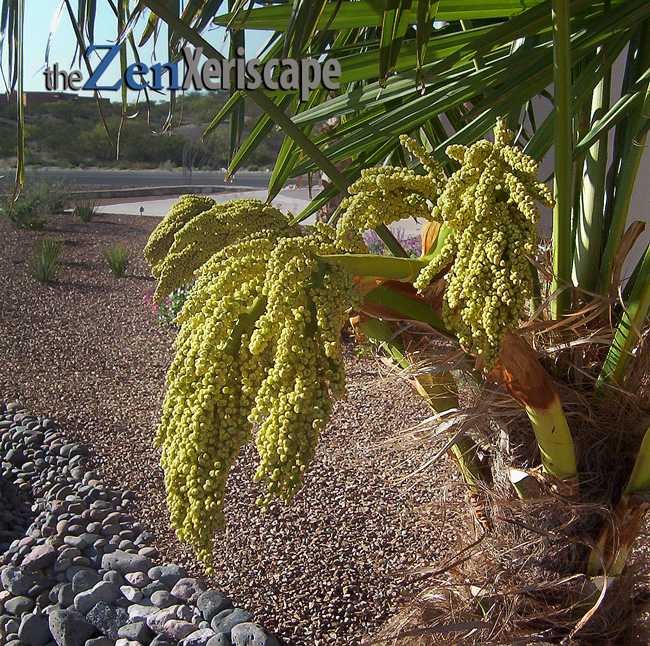
Photo by Doug Martin
Windmill palm pros and cons
CONS:
Remarkably, I struggled to find any detriments to having a windmill palm in your landscape. So, what I’ve provided below as the contrived cons are inflated.
Windmill palm fruit can attract pests
In my case, I believe some local rodents had feasted on the fruits from my windmill palm. So, as a deterrent, I simply pruned off the branches shortly after they flowered.
In addition, birds love the fruit, too, and that is a good thing. But, they can leave some unwelcome reminders of their visits on the ground.
Fortunately, eliminating the branches after they flowered only takes a few minutes, at the most. You can still enjoy the flowers, and even let the fruit grow a little bit. Just remove them before they ripen to avoid attracting the wrong kind of visitors to your landscape.
Thin trunk at the base
In the case of the windmill palm, it has a thin trunk at its base. But, as it grows each year, the base tends to get wider. For me, that looks a little odd, and when the wind blows, it makes me feel a little unsettled.
However, despite this palm’s relatively thin or narrow trunk, the tree is very stable, even in a high-wind situation.
Windmill palm is easiest palm to care for
Other than that those contrived cons, I have found the windmill palm to be one of the easiest palms to care for in my arid landscape.
and only a couple cons.
Best of all, it adds tropical vibes!
Photo by Doug Martin
TAKEAWAYS:
Windmill palm pros and cons
The windmill palm can add a tropical ambience to any arid landscape. It is low maintenance, and can survive single-digit low temps, as well as the sweltering highs that are very common in southwestern summers.
In addition, this palm tree is tolerant of drought conditions. Alternatively, it can also survive periods of too much water.
This palm has either a male or female gender. Both the male and female produces branches filled with clusters of flowers. Once fertilized, the female will then produce fruit.
All things considered, the pros of the windmill palm greatly outweigh the cons.
Share your thoughts about the windmill palm!
Thanks for reading our windmill palm pros and cons post. If you already enjoy this palm tree in your landscape, please share your thoughts in the comments section below!
Content and photos by Doug Martin and The Zen Xeriscape