The teddy bear cholla is a drought-tolerant, heat-loving cactus that adds a southwestern flair to any xeriscape. But, it’s also known as the jumping cholla, and with good reason. Its spines seem to reach out to penetrate clothing and flesh, and that’s not good! But now, here are the teddy bear cholla pros and cons.
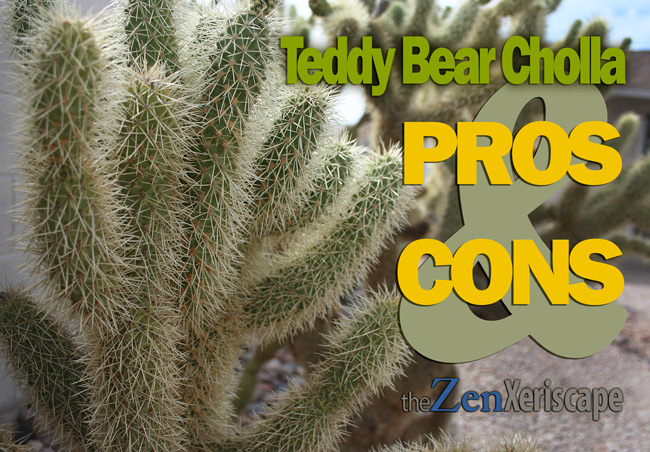
will add a southwestern vibe
to your arid landscape.
Photo by Doug Martin
Teddy bear cholla pros and cons
PROS of the teddy bear cholla
Adds southwestern ambience to landscape
To add an almost instant southwestern character and flavor to any arid landscape, plant a teddy bear cholla cactus. This plant’s hardiness and almost unrivaled will to survive while still looking good implies values that were common in the Old West.
—Combine this cactus with other varieties
Of course, you could pair your teddy bear cholla with taller companion cactus plants, like the mighty saguaro cactus or the organ pipe cactus for an ultimate southwestern vibe. All of those cactus varieties are drought- and heat-tolerant. And, those combinations would add even more interest to your xeriscape.
Looks stunning in the dawn and dusk sunlight
I especially love looking at the warm glow emanating from my teddy bear cholla as the abundant spines capture the sunlight in the early morning dawn, as well as when the sun sets in the evening. It’s a fuzzy, glistening glow that no other cactus variety can replicate!
Drought-tolerant
Here in the Phoenix, Arizona suburbs, I rarely give my teddy bear chollas supplemental water. And, when I do, I only water away from the base of the cactus to stimulate lateral root production, and to guard against root rot.
Heat-tolerant
This wonderful cholla cactus can thrive even in the intensely hot, southwestern summers we experience in southern Arizona. So, plant it in full sun to promote its best health and growth characteristics.
Minimal maintenance
One of the things I most enjoy about the teddy bear chollas in my landscape is that this plant requires minimal maintenace. I rarely give this cactus supplemental water, and have never added fertilizer.
In addition, I have never pruned this segmented cactus, although that is always an option.
Looks like a small desert tree
As the teddy bear cholla ages, it will look more and more like a grizzled, old tree. It will develop a trunk at its base, but the new growth at its top will remain green, just like a tree.
Teddy bear cholla propagation is easy
To propagate the teddy bear cholla, just break off a segment and stick it in the soil. That’s it!
Within a month, the new segment will have securely rooted itself. And within a few months, you should see new growth. All-in-all, this is one of the easiest arid-loving plants to propagate.
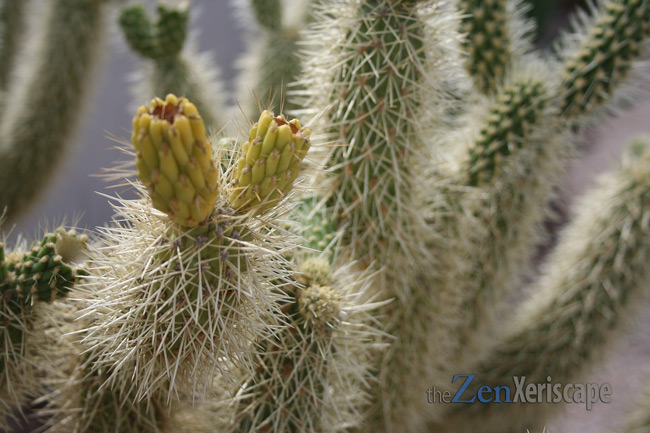
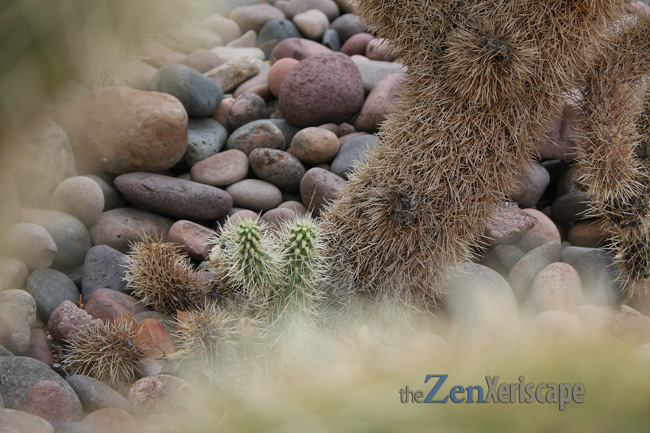
can drop off easily. From there, they can root
and grow new plants. However,
the seed pods can also dry out and fall off.
Photo by Doug Martin
Teddy bear cholla pros and cons
CONS of the teddy bear cholla
Spines are painful to remove
The teddy bear cactus is also known as the jumping cholla. While it sounds playful, believe me, it is not a playful cactus. In fact, the wise gardener will plant the jumping cholla far away from playful pets, adventurous children, and walking adults.
Spines are an inch-or-two long, and densely cover each cylindrical segment. The spine’s tips, once they puncture skin or latch onto clothing, will quickly open up just like a barbed fish hook.
And those barbs make this spine extremely painful to extract. Trust me, I have experienced the pain myself, and so has my dog!
Branches or segments fall off easily
Unfortunately for the landscaper, the segments or branches of this cactus fall off easily. Just recently, we had a 24-hour period of 25+ MPH wind gusts. And, those gusts of wind were enough to shake off a few segments from each teddy bear cholla.
In nature, those loosely attached segments help to propagate the plant. Because, wherever they fall on the soil, they will quickly grow roots and start a new plant.
of the teddy bear cholla can fall off easily.
Photo by Doug Martin
—Clean-up is tricky
Unfortunately, for the homeowner, loose segments mess up the landscape. And, to clean them up can be tricky.
I have used a shovel, along with a river rock, to lift them safely into a trash container. Furthermore, all during the clean-up process, I had to be careful of the barbed spines.
TAKEAWAYS
Teddy bear cholla pros and cons
PROS
The teddy bear cholla has lots of benefits for the arid landscape gardener. It’s hardy, drought-tolerant, and heat-tolerant.
Additionally, it is surprisingly easy to propagate. And, best of all, it adds a southwestern ambience to any xeriscape.
CONS
The spines are this plant’s biggest downfall, at least for the gardener. In nature, the spines help protect the plant from predators and shade the plant from intense sunlight.
But, in our xeriscapes, those same beneficial spines can be painful to remove when they get stuck to our skin and flesh.
Teddy bear cholla pros and cons and comments!
Thanks for reading our teddy bear cholla pros and cons. Read more about this interesting cactus in our post, Teddy Bear Cholla description. Plus, if you have this wonderful, but sometimes painful, cactus in your landscape, please share your experiences in the comments section below!
Content and photos by Doug Martin and The Zen Xeriscape