The Baja fairy duster shrub has unique, fairy-duster shaped flowers that are bright red. As expected, this attention-grabbing flower attracts many pollinators, including bees and hummingbirds. Once pollinated, the shrub produces seeds pods, with many seeds per pod. Read more about the Baja fairy duster seeds, and how this shrub reproduces.
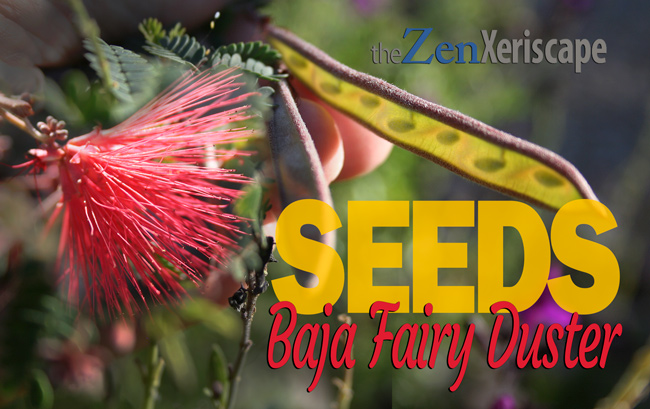
that are really just like a bean.
Inside are the small seeds.
Photo by Doug Martin
Baja fairy duster seeds
Baja fairy duster is a legume
Surprisingly, the Baja fairy duster is a legume. That means it’s a member of the pea, bean, or lentil family of plants. To reproduce, all legumes produce pods that contain seeds.
Other common legume plants in the southwest
Legumes can grow into shrubs, just like the Baja fairy duster, while others grow into trees. Some common legumes that landscapers can use in their arid xeriscapes include:
—Mesquites, which are common shrubs that grow naturally in the Sonoran and Chihuahuan Desserts. However, when gardeners use these hardy plants in landscapes, they can quickly grow into massively large trees.
—Acacias are also common landscape plants that gardeners can use in their arid landscapes. In fact, acacias are my favorite tree for my xeriscape. They are heat- and drought-tolerant, and also survive low temperatures. Plus, they look beautiful.
—Desert Ironwood trees have pretty lavender flowers, and they also grow naturally in the Sonoran Desert. This is one tree that I still have not used in my landscape, but I hope to in the future.
—Palo Verde might be the most common tree that I see in my suburban Phoenix neighborhood. They are beautiful trees, and they get small but vibrant yellow flowers in the spring. However, when they receive extra irrigation, they can grow into a massive size—so just be aware of that!
—Many other shrubs and trees that are also legumes are available for your arid landscape. They include sennas, which I love, and of course, the fairy dusters.
Baja fairy duster seed pods
The seed pods for the Baja fairy duster develop after pollination. Remarkably, the seed pods for this shrub are covered with thin, almost microscopic hairs, which allow the pod to dissipate heat.
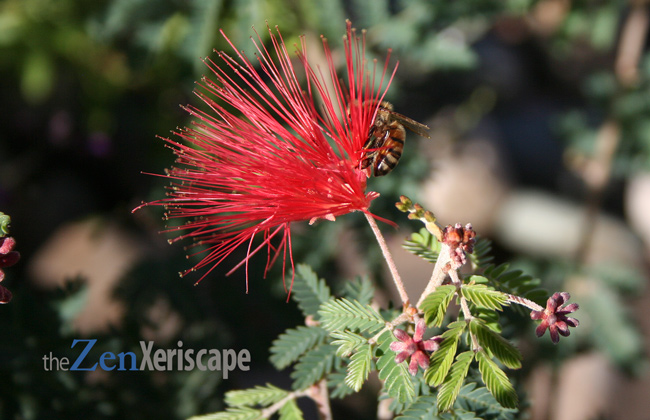
will pollinate the flower which enables
the shrub to produce pods loaded with seeds.
Photo by Doug Martin
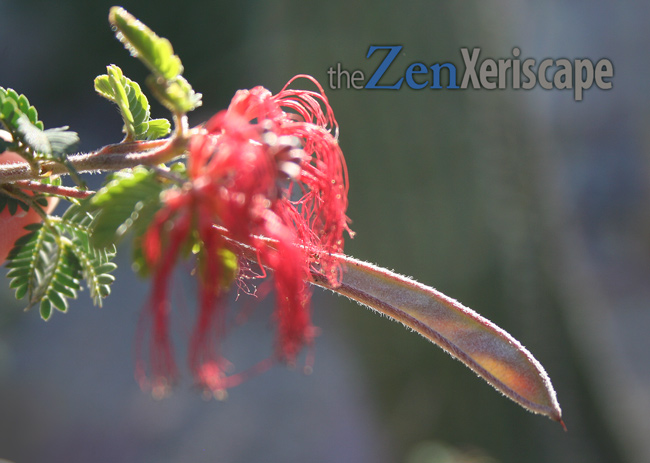
have microscopic hairs that help
dissipate heat during hot summers.
Photo by Doug Martin
Seeds grow inside the pod
Inside the Baja fairy duster pods, seeds will develop and grow. After the seeds are fully grown and ripe, the seed pods will dry out and turn brown.
Seed pods split open like a catapult
Seed pods dry out
Once the seed pods are completely dry, the fibers in their outer walls have been stretched tightly, almost like the string on a bow.
Seeds are catapulted
As the pressure builds on the seam or suture of the seed pod, the sutures finally and dramatically release their hold on the seed pod contents. The, the dry outer walls spring open, and catapult the seeds outwards, away from the plant.
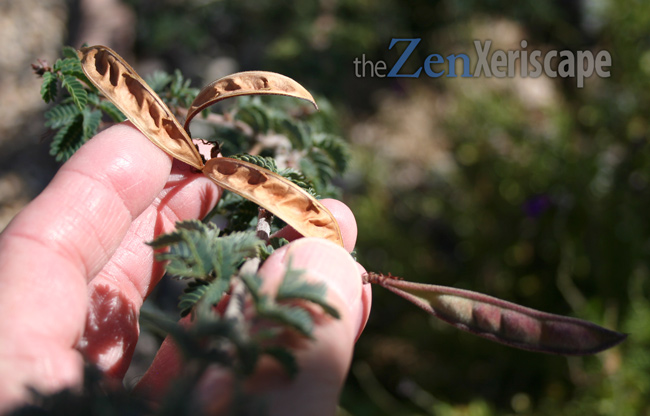
they will pop open and fling or catapult
the seeds away from the parent plant.
Photo by Doug Martin
Seeds can blow away
And, if the wind is blowing, the thin, light-weight, and aerodynamically shaped seeds might travel even farther from the parent plant.
Strategy for survival and propagation
It’s a brilliant strategy for survival and propagation, and assures that many of the seeds will be dispersed away from the original plant. Once in its new location, and if the conditions are optimal, the seeds will germinate and start the whole process over again.
Soon, it’s possible to have a forest of Baja fairy dusters growing in your arid landscape!
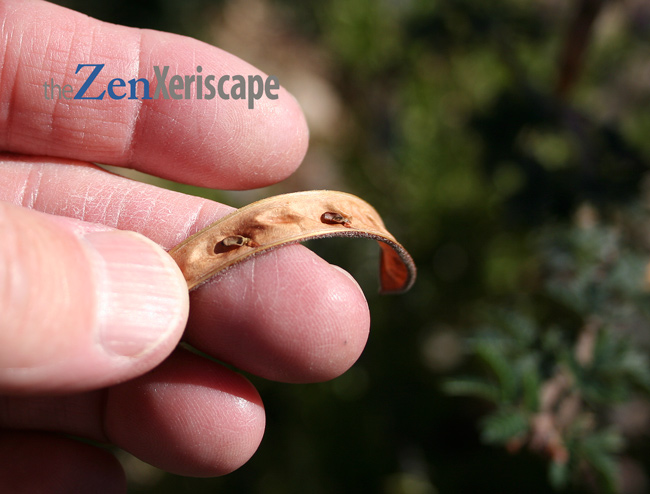
Their light weight makes it easy for the
wind to carry them even farther away
from the parent plant.
Photo by Doug Martin
Harvest seed pods before they split open
However, if you don’t like the idea of Baja fairy duster shrubs growing like weeds in your landscape, just harvest the seed pods before they split open.
The timing is tricky, because you have to wait until the seed pod is dry, but not so dry that they split open in your hands. After you do pick the seed pod, store it in a secure container or large envelope.
Then, sow the seeds, water the soil deeply, and watch for new growth. In the beginning of their growth phase, water almost every day, and protect the young plants from the harsh sun.
Read more about the Baja fairy duster
If you’re interested in using this shrub in your arid landscape, read more about the Baja fairy duster and how to provide the proper care. Above all, this shrub is hardy, easy to care for, and looks fantastic in a xeriscape.
TAKEAWAYS:
Baja fairy duster seeds
The fairy duster is a legume
The Baja fairy duster is a legume that produces seed pods. The pods grow just like the beans or snow peas that you might have already grown in your garden.
The pods contain seeds
Inside the pods are tiny seeds. Once the seed pod dries out completely, the outer walls will spring open and fling the dried-out seeds in all directions.
Harvest the seeds
To harvest the seeds, pick the pods before they completely dry out. Then, place them in a secure container or envelope.
Plant the seeds in your xeriscape
Once completely dry, the pods will split open, and you can harvest the seeds to plant later in a more desirable location!
Thanks for reading our article about the Baja fairy duster seeds. If you enjoy this shrub in your landscape, please share your experiences in the comment section below!
Content and photos by Doug Martin and The Zen Xeriscape