For this transplanted southwestern gardener, it was love at first sight when I first saw a toothpick cactus (Stetsonia coryne). I bought one and planted it in a sunny location. Since then, it has been growing slowly but steadily. Here are the toothpick cactus description and care guidelines.
Toothpick cactus description and care
TOOTHPICK CACTUS DESCRIPTION
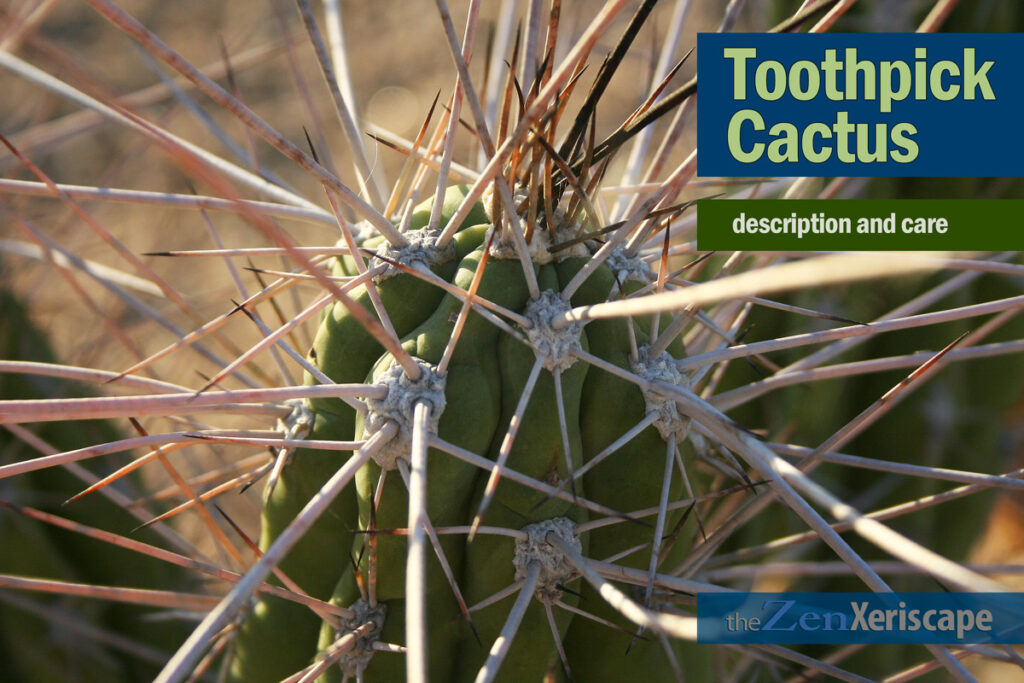
and sharp spines. Read the description
of this columnar cactus and
how to care for it!
Photo by Doug Martin
Originates from Argentina
While I know this plant by the name of toothpick cactus, it is also known as an Argentine toothpick cactus. Naturally, it originates in the South American country of Argentina, but also grows in the low mountains and plains of Bolivia and Paraguay.
Size
The toothpick cactus is a columnar, drought-tolerant plant that can reach 30 feet. However, in my residential landscape of southern Arizona, only a 15-foot-height at maturity is more likely.
Growth habit and form
This cactus grows arms that will grow mostly straight up, but with a slight angle outwards. As those arms grow, they will develop more arms. After many years, a single column toothpick cactus will have 10 to 20 arms and could expand its width out to 10 to 15 feet.
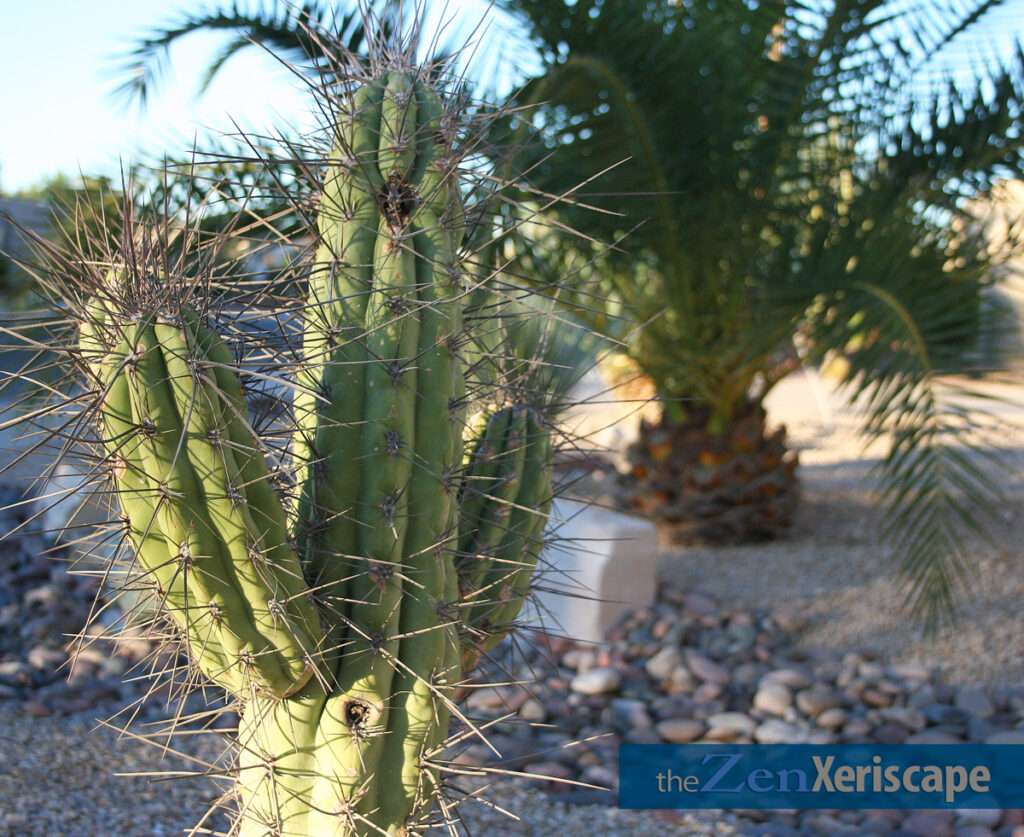
and develops multiple arms.
Photo by Doug Martin
Buy gifts for the gardener! (As an Amazon Associate, I earn a commission from qualifying purchases.)
Growth rate
The toothpick cactus grows very slowly. Compared to the faster-growing Peruvian apple cactus or the organ pipe cactus, the toothpick cactus grows at a more moderate rate.
In fact, both of my toothpick cactus plants are growing very slow—they might be the slowest growing cactus plants that I have.
Spines
Out of all the cacti I have in my xeriscape, the Argentine toothpick cactus has the longest spines. Newer spines at the top of the column are darker in color, and do a good job of protecting the new tender top-growth from predators.
The largest spines I measured were 4-1/2 inches. They are much more tough and more difficult to break than the dainty toothpicks we use for our oral dental care. In addition, they are much sharper.
There is no way I would let one of these four-inch spines get near my teeth or gums, despite this plant’s name.
I have seen evidence of an animal gnawing on a rib at the base of my cactus. I suspect that, whether it was a rabbit or rodent, it got tired of getting poked by spines for only a few, fleeting bites of cactus flesh. There was only minimal damage that quickly calloused over and healed.
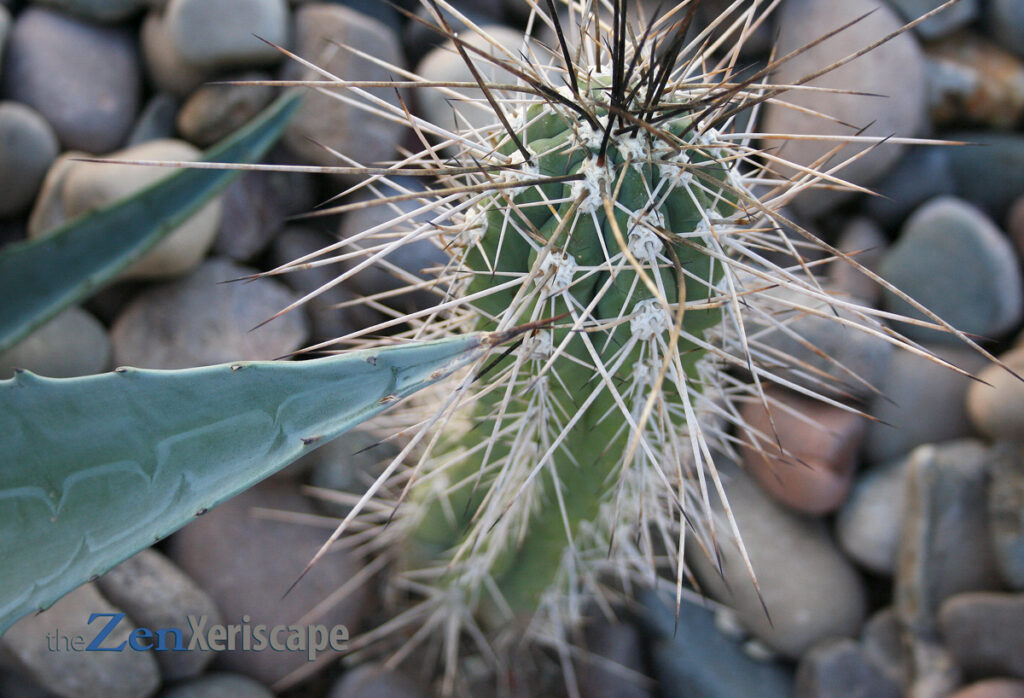
century agave and the toothpick cactus.
I don’t want to get in the middle
of that contest.
Photo by Doug Martin
Prime plan discounts! (As an Amazon Associate, I earn a commission from qualifying purchases.)
Flowers
The toothpick cactus will flower only after it reaches a height of about 5 feet. I still have about 2-1/2 feet and another 5 years to go before I can expect to see any flowers or fruit from my toothpick cactus.
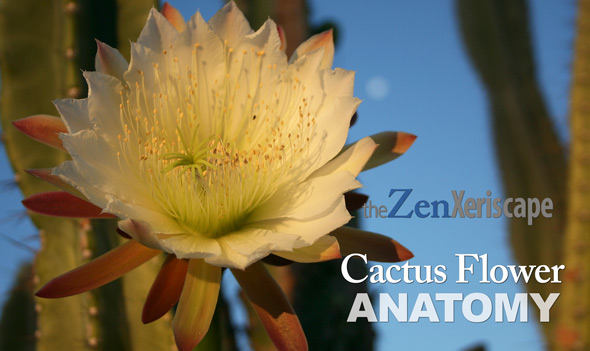
The flowers are big and mostly white. While slightly smaller than the Peruvian apple cactus flowers, they look almost identical. They are beautiful, but only last 24 hours. The most spectacular blossoming phase occurs during the night, when pollinators like bats and moths are most active.
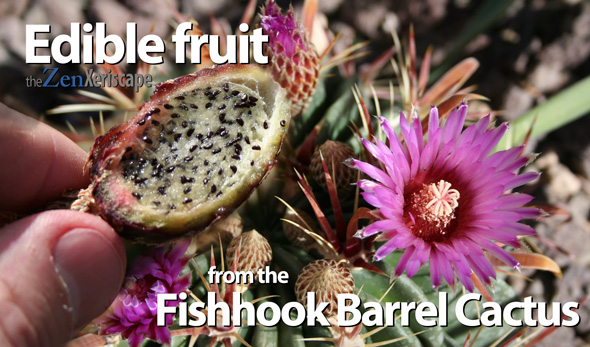
I have never tasted the fruit, but it is similar in appearance to the Peruvian apple cactus fruit. It has a white pulp with tiny, edible black seeds, just like the Peruvian apple cactus, and that fruit tastes so good.
Toothpick cactus description and care guidelines
TOOTHPICK CACTUS CARE GUIDELINES
Hardiness zones for the toothpick cactus
—Cold tolerant
The toothpick cactus can survive a low temperature range of 20 to 25 degrees Fahrenheit. That low range puts this plant in the USDA Plant Hardiness Zone range of 9a-up-to-11.
I live in Phoenix, Arizona, and there have been winter nights where the temperatures have dipped into the single digits. I think the last year that happened was in 2013.
—Heat tolerant
Based on my experience, the toothpick cactus can vigorously survive even when summertime highs reach over 120 degrees F. We have had a few of those scorchers in the past, and my toothpicks seemed to love the heat.
If you live in a colder plant hardiness zone, you could still plant this cactus in a pot. It would look great as a potted cactus, and you would get lots of compliments on your outstanding, unique taste in plants.
However, if you have children or pets, please use caution. The tough and sharp 4- to 5-inch spines could easily puncture skin.
Plant in sunny or partly shaded location
My oldest toothpick cactus receives sunlight all day. However, the cutting I took from the parent plant only gets about 4 to 5 hours of sun each day. Both plants are doing well.
If your toothpick cactus is in a pot, try to give it at least a few hours of direct sunlight. Sometimes that’s not possible in a house or apartment, but I think this cactus will do okay in a mostly shady location.
Drought-tolerant, plant in well-draining soil
This cactus, like most drought-tolerant plants, does best in well-draining soil. I have one toothpick cactus planted on a mound between two golden barrel cacti. During the summer, I water that group of plants deeply only once a month.
While a little extra water during the summer encourages growth, too much water might also encourage root rot. With this cactus, a once-a-month watering schedule would work well.
My other toothpick cactus cutting is growing very close to a century agave. I rarely provide extra water to the agave, but do apply a little extra water to the toothpick cactus. However, when I do water, I always prevent water from pooling around the base of the toothpick cactus.
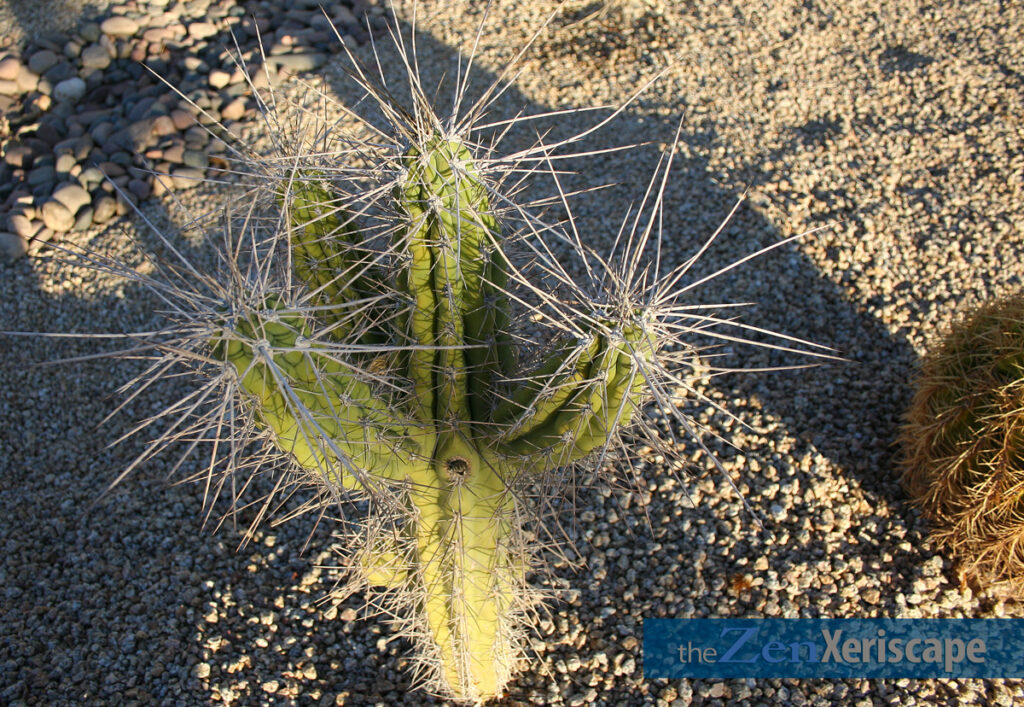
It’s growing next to a barrel cactus
and a Canary Island date palm tree.
Photo by Doug Martin
Get Prime! (As an Amazon Associate, I earn a commission from qualifying purchases.)
Landscape uses for the toothpick cactus
Someday, I hope that my toothpick cactus will reach a height of 15 to 20 feet. It will be a strong focal point for my xeriscape. However, even at its current smaller size, this cactus already stands out.
While I love the arms it is growing right now, I plan to prune new growth so this cactus does not get too wide or overgrown. Without pruning, this cactus could turn into its own jungle of thorns and might become a habitat for rodents or other pests.
The beauty of this cactus, besides evoking a southwestern theme, is the splendor of its tall columns and its long, sharp spines that sparkle with a warm glow during dusk and dawn.
The toothpick cactus is a work of art that could also be used as a background focal plant when you place smaller cacti and agaves in the front for contrast.
In addition, the toothpick cactus would look lovely surrounded by a sea of desert marigolds or other drought-tolerant, heat-tolerant perennial flowers.
TAKEAWAYS:
Toothpick cactus description and care guidelines
Because of its rugged, southwestern look, and because it loves the heat and dry desert environment, I have great expectations for my toothpick cactus. My hope is that I live long enough to see it reach its adult size of 15 feet or more. I also hope that I get to see its flowers and taste its fruit.
I am sure that no matter where you live in the world, you can also expect lots of enjoyment from your own, easy-to-care-for toothpick cactus. Best of all, you can grow this in your landscape or in a container.
Prime makes a great gift! (As an Amazon Associate, I earn a commission from qualifying purchases.)
Content and photos by Doug Martin and The Zen Xeriscape