I bought my dwarf Agave potatorum ‘kichiokan marginata’, also known as the dwarf variegated butterfly agave, from one of the big-box DIY stores. This dwarf agave looked so charming in its little container. It had variegated yellow-green leaves along with its blood-red sharp spines—I could not resist buying it. But, would this plant be an easy agave to care for? Here are our Agave potatorum ‘kichiokan marginata’ care guidelines.
But, before we get to the agave potatorum ‘kichiokan marginata’ care guidelines, let’s describe this beautiful succulent.
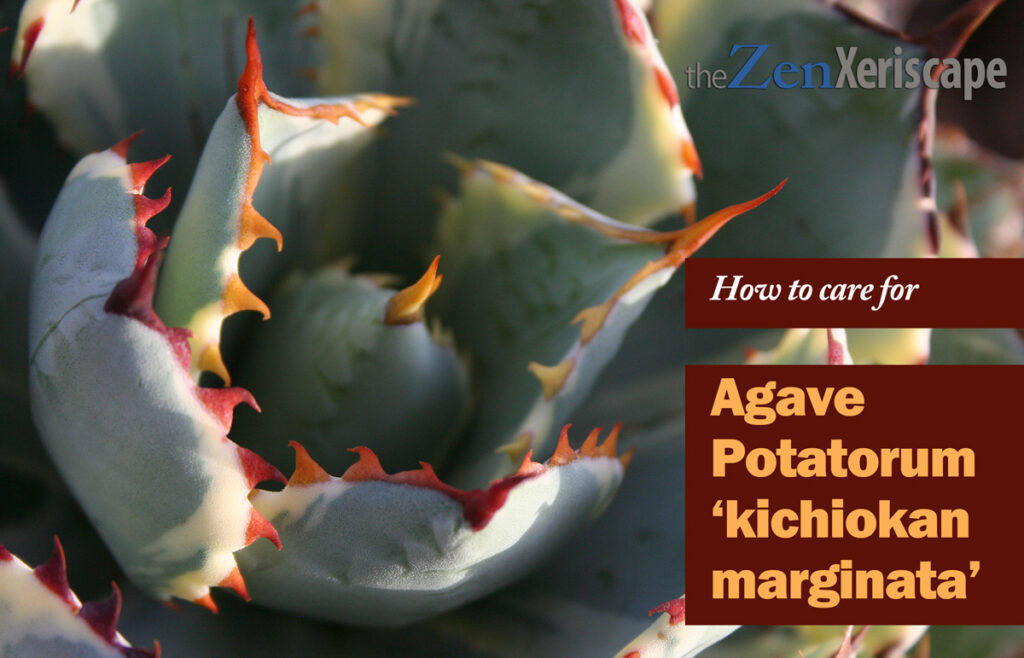
care guidelines for this beautiful succulent.
Photo by Doug Martin
Dwarf agave potatorum ‘kichiokan marginata’ description
When I bought this dwarf species of agave, it was only four inches tall and four inches wide. Today, after many years of slow growth, it is only eight inches high and eight inches wide.
Mature size:
Once mature, the dwarf Agave potatorum ‘kichiokan marginata’ could grow up to 1 foot tall and 1 foot wide. Unfortunately, I suspect that ambitious height-and-width goal would be attained only after many, many years of growth.
In my experience and in my landscape, my mature dwarf Agave potatorums are only 8 inches tall. Based on their current growth, I do not expect these dwarf succulents to ever get to be more than 1-foot wide. However, as they continue to grow, they could exceed the 1-foot tall goal.
Growth habit:
This beautiful dwarf agave grows in a symmetrical rosette. Its leaves are tightly packed together, which makes it a little difficult to prune.
Leaf description:
The leaves are uniquely beautiful and captivating, with beautiful variegations. They have a light yellow or off-white narrow margin of color, which frames a luscious variegated blue-green-gray inner leaf.
Spines:
The spines are relatively long, with sharp terminal spines. For added protection from predators, the leaf margins are also lined with equally sharp, but shorter spines.
Spines on my dwarf agave potatorum plants are a deep blood red. Maybe the red spines are a warning for predators (rabbits or deer), but for me, they help make this dwarf succulent look especially beautiful.
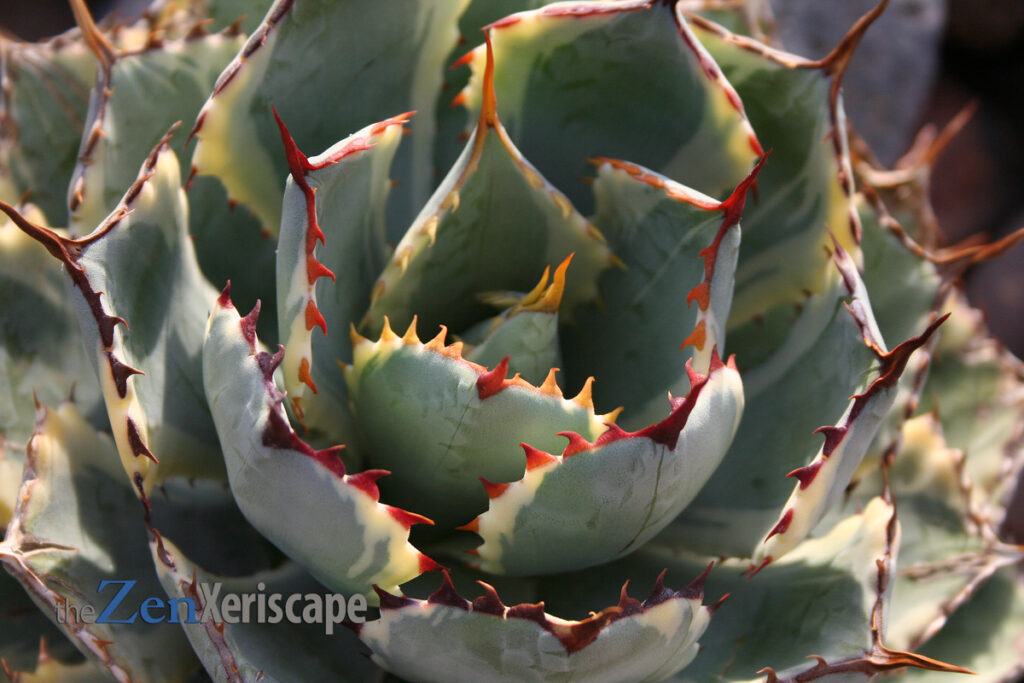
has distinctive red spines.
Photo by Doug Martin
Get Prime! Special offers for Prime for Young Adults and Prime Access! (As an Amazon Associate, I earn a commission from qualifying purchases.)
Agave potatorum ‘kichiokan marginata’ care
Plant in well-draining soil:
Just like most succulents, plant this dwarf agave in soil that drains well. If needed, amend with organic garden soil and a little bit of sand.
If possible, plant on an elevated surface, or in a hilly rock garden to enhance drainage.
Full sun or afternoon shade:
I have my oldest dwarf agave potatorum ‘kichiokan marginata’ planted in full sun, which it generally enjoys. However, during our intense southern Arizona, low-altitude summers, I suspect this succulent would be happier in afternoon shade.
Otherwise, if you live in a region with more moderate summer temperatures, plant this agave in full sun for its best leaf color and growth.
Water sparingly because it is drought-tolerant:
The agave potatorum ‘kichiokan marginata’ does best when its soil is dry. While water helps accelerate the growth rate, its roots can rot if this agave sits in pooling water or moist soil. For awhile, I thought my dwarf Agave potatorum was a goner, because I had given it too much water. It lost much of its color, and came close to rotting.
Fortunately, after keeping the ground dry and only watering occasionally away from the base of the plant, this dwarf agave has come back strong. Not surprisingly even in the harsh Arizona summers, this agave loves its soil to be dry.
Temperature ranges, growing zones:
I was surprised that my diminutive agave can take the heat. This past summer in Phoenix, we had a few days with temperatures over 120 degrees.
In addition, the rest of the summer had broken many records for heat. So, if your summers get hot and steamy, this agave will reward you with vibrant health.
Since I have had this dwarf agave, we haven’t had winter temperatures that dipped much below freezing. The plant is rated to be hardy in the 20-to-30 degree range.
If you live north of the USDA hardiness zones of 8 or 9, it might be wise to protect this plant when temps dip down to 25 degrees. That’s the safe way to go, anyway.
Growth rate of the dwarf agave potatorum:
While this dwarf cultivar will always remain small, my agave has shown exceptional growth. Its size has increased by 50% since I transplanted it to a rabbit-safe location.
But, after eight years in my landscape, this agave’s width has remained at about eight-inches wide. However, it will continue to grow up as it produces new leaves. Eventually, this dwarf agave could reach 1-foot tall (or maybe a little higher).
Still, this agave will never compare in size to its larger agave brethren. However, my dwarf agave is giving me pups, or new offshoots. As the new pups grow around the base of the original plant, this succulent could easily increase its width to one-or-two feet.
Get Prime! Free 30-day trial! (As an Amazon Associate, I earn a commission from qualifying purchases.)
Propagate with pups:
Also, this agave is producing a few offshoots that all seem to be tucked safely under the parent plant’s older, dried-out leaves. So far, the new emerging pups stay close to its parent plant.
That is a big difference from my Weber, century, and blue agaves. All those large agaves send out pups, sometimes many feet away from the parent plant.
To propagate in a new location, carefully dislodge the pups that are growing around the base of the plant. As you wedge the pup lose, be sure it retains some of its roots so it can quickly adapt to its new location.
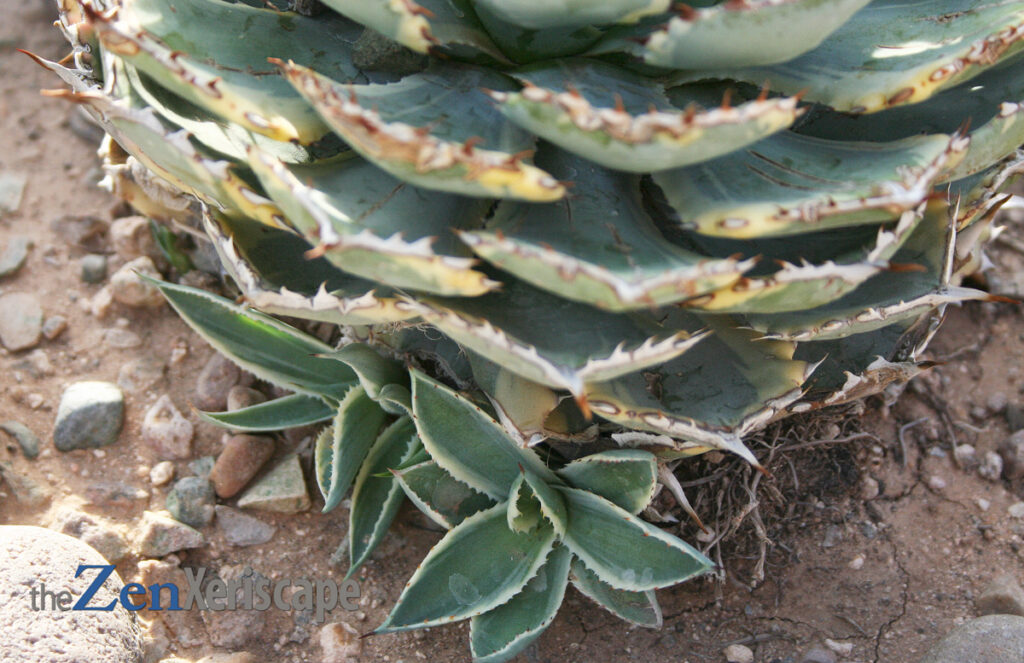
by removing the pups and roots
from the parent plant and replanting
in new location.
Photo by Doug Martin
Landscape uses or containers:
The dwarf Agave potatorum ‘kichiokan marginata’ would be a dramatic accent plant if it were tucked under a larger woolly butterfly bush, or a sage bush, or grouped together with other drought-tolerant succulents. The size contrast and its variegated color would add a sparkling contrast to any larger plant.
Best of all, this agave’s drought-tolerance and smaller size makes it ideal as a potted plant. It would look magnificent in a pot that is surrounded by other succulents of varying colors. Or, it would add a dramatic size and color contrast if it were tucked in with another larger group of succulents.
And if you have this dwarf succulent in a pot, you can place it in an elevated place in your landscape to avoid any predators.
Protect from predators:
When I first bought this succulent, I planted in the front of my house close to a mature Mediterranean palm tree. Unfortunately, it was unprotected from rabbit predation, and those cute creatures quickly chewed on the leaf edges.
Fortunately, they did not kill this tough dwarf succulent, but I did have to move it to my walled-in landscape in the back of my house.
Without protection, rabbits and deer, and possibly other animals, could quickly chew on and kill this dwarf agave. Use wire fencing to protect it from predation, or place your container in an out-of-reach location.
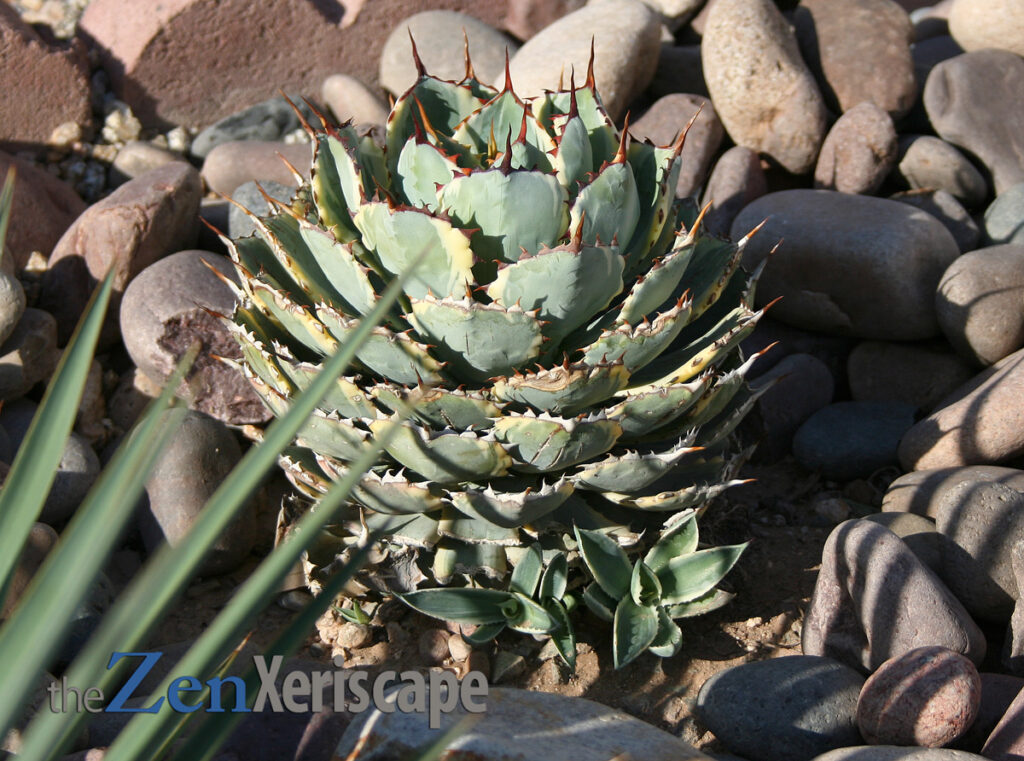
as a unique and petite accent plant.
Photo by Doug Martin
Succulent and cactus garden soil! (As an Amazon Associate, I earn a commission from qualifying purchases.)
TAKEAWAYS:
Agave potatorum ‘kichiokan marginata’ care
The dwarf agave potatorum ‘kichiokan marginata’ is a tough, drought-tolerant and heat-tolerant succulent. This small agave would work well in a rock garden or other arid landscape, or as a potted plant.
While its small size would not make it an ideal focal point in your landscape, it could be a striking accent plant, especially if you group three-or-five of these petite plants together.
Thanks for reading our agave potatorum ‘kichiokan marginata’ care guidelines. If you have experience with this dwarf succulent, please share you thoughts in the comments section below.
Content and photos by Doug Martin and The Zen Xeriscape

Get Prime with special offers! (As an Amazon Associate, I earn a commission from qualifying purchases.)