I’ve had Desert Spoon plants (Dasylirion wheeleri), also commonly called the Sotol, in my landscapes when I lived in both southern New Mexico and southern Arizona. It’s a tough, drought-tolerant, and care-free plant. Here are the Desert Spoon care guidelines, as well as a description.
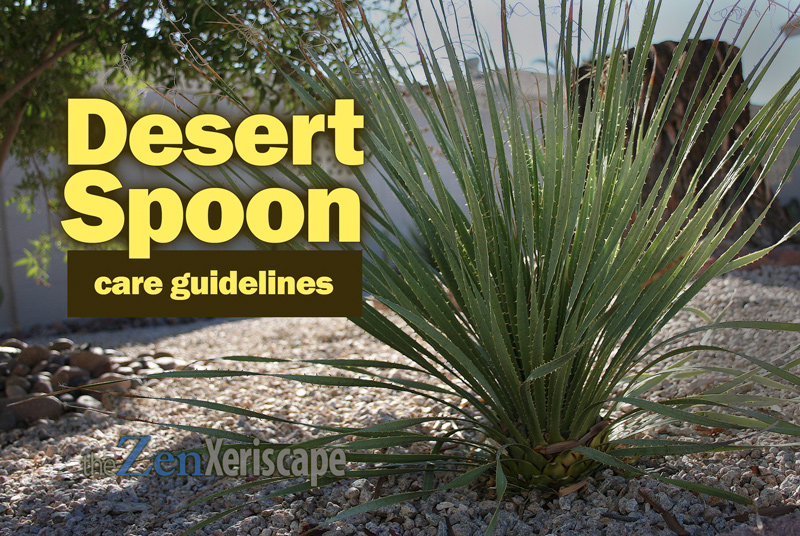
that is perfect for any arid landscape.
Photo by Doug Martin
Desert Spoon care guidelines
Plant in full sun:
The Desert Spoon performs best when planted in full sunlight. However, here in southern, low-altitude Arizona, this plant can also tolerate some afternoon shade, especially in our sweltering summers.
In general give this sun-loving plant at least 6-to-8 hours of sunlight throughout the day.
Good soil drainage:
When planting, be sure to place your Desert Spoon in a location that has good drainage. Based on my experience, this plant cannot tolerate wet soil.
If necessary, modify caliche soil with organic garden soil or a specially prepared cactus or succulent mix. Also, incorporate some perlite, pumice, or small volcanic rocks into the mix—they are available at any large DIY garden center.
Or, consider planting your Sotol on a sloping or elevated location. In fact, the Desert Spoon is a perfect plant for a hilly rock garden.
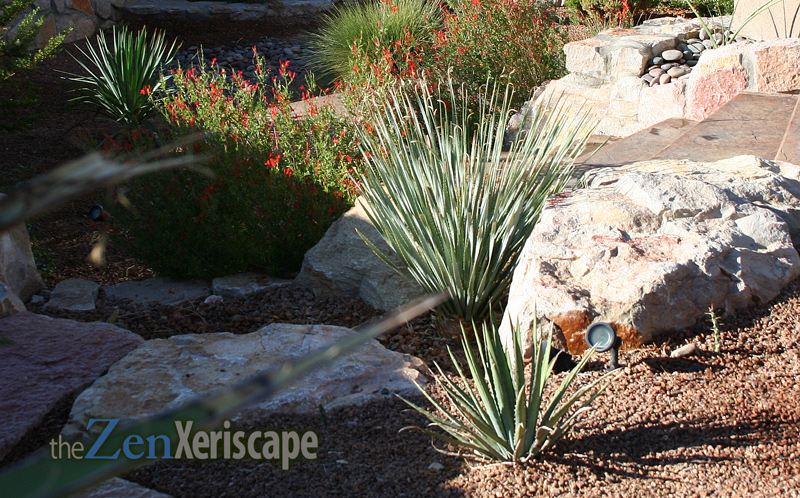
a Desert Spoon in between two large rocks
where it would have good drainage.
Photo by Doug Martin
Water infrequently:
Your Desert Spoon is highly tolerant of drought conditions. With my established plants in the Phoenix suburbs, I rarely give them supplemental water.
However, newly planted Desert Spoons do benefit from regular, weekly waterings during their first growing season. To prevent rot, be sure to not water directly around the base of this plant.
In my case, I have watered about 2-to-3 feet away from the base of my Desert Spoons during the first year. That prevents water from ponding around the base of the plant, and it encourages new, healthy root growth away from its base.
Fertilizer:
In general, the Desert Spoon does not require fertilizer. However, you might consider adding a 5-5-5 or 10-10-10 well-balanced fertilizer at the beginning of the growing season.
In my case, I have never fertilized my Desert Spoons, but I might do that in the future. I think by adding just a little slow-release fertilizer would help spur its growth, and make the serrated leaves look lusher.
Pruning:
While you do not have to prune your Desert Spoon, I often do, especially in the fall. The reason I prune this plant, is because the lower, older leaves tend to dry out and turn sandy-brown.
So, I use a pruning saw to trim off those dead leaves very close to the trunk. If you prune this plant as it grows, the Desert Spoon will develop into a very interesting-looking, small desert tree.
CAUTION: This plant has very sharply serrated leaves on its margins. They can cause serious damage to your skin and eyes. Whenever I prune this prickly plant, I wear gloves, long sleeves, and eye protection. Always use caution when pruning the Desert Spoon!
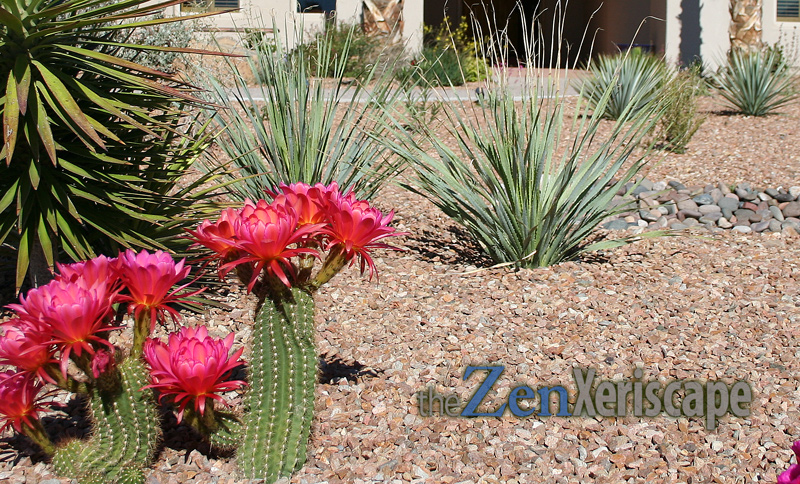
(with flowers) and interspersed with
other drought-tolerant landscape plants.
Photo by Doug Martin
Desert Spoon care guidelines
Desert Spoon description
The Desert Spoon (Dasylirion wheeleri) is a must-have plant for an arid landscape. This shrub grows naturally in the Chihuahuan Desert of southern New Mexico, and is also common in the Sonoran Desert.
Desert Spoon characteristics:
—Height and width:
When mature (over many, many years), this plant might reach 6 feet in height, and a 3 feet width.
And, if you prune off the dead leaves every year, this plant’s trunk will look extremely interesting—it will look like a small, desert tree with a thick trunk.
Desert Spoon leaf description:
—Long, thin leaves
The Desert Spoon leaves are long and thin, and can grow to be 1-to-3 feet long. As the leaf grows, it grows mostly straight out, but at an angle from the center rosette.
—Leaf edges have sharp serrations
On the edges, or the margins of the leaves, are very sharp, curved serrations. To me, this is the only part of this plant that looks like a spoon.
The serrations are sculpturally beautiful, and to me they look like the side-profile of a spoon. However, I’m not sure whether that’s how this plant derived its unique name.
While the exotically shaped serrations are attractive, please remember that they are also extremely sharp and potentially dangerous.
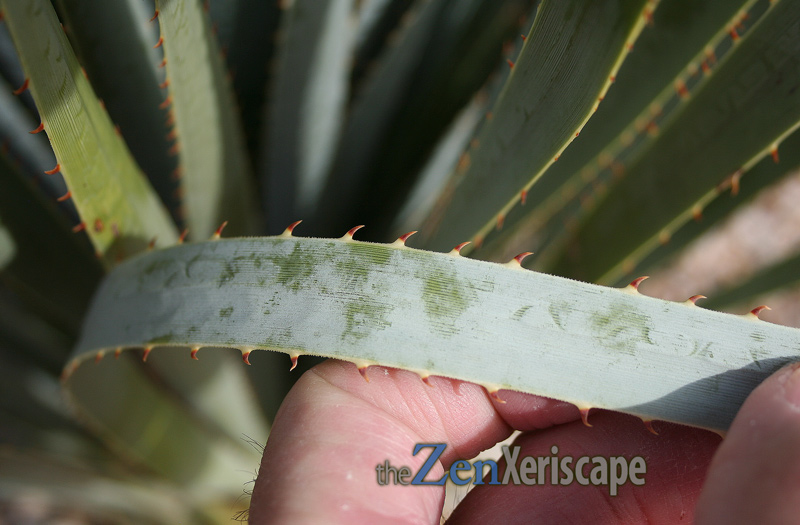
its leaf margins. The spines or serrations look
like they could be used on a saw!
Photo by Doug Martin
—Leaf color
Depending on the variety, the Desert Spoon can have blue-green leaves, or leaves that are a lush green. In New Mexico, I had the green variety, but here in Arizona, I have the blue-green variety.
Desert Spoon shape:
—Rosette growth habit
This symmetrical plant has leaves that emerge from the center of the plant, giving it a rosette shape. As it continues to grow, new growth from the center pushes the older leaves out towards the edge of the plant.
—New growth emerges from the center
New leaves always emerge from the center. If the center growth begins to turn brown or black, that could mean the plant is too wet and is beginning to rot.
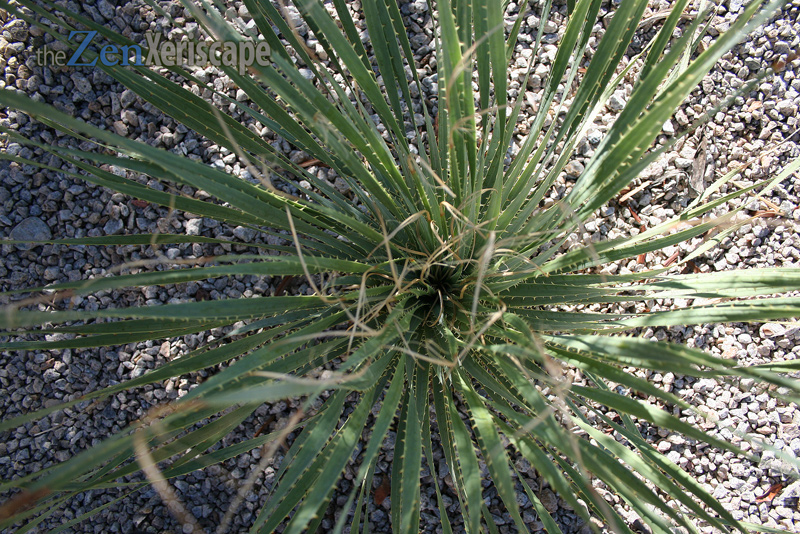
from the center, which means it has
a rosette growth habit.
Photo by Doug Martin
—Globe-shaped mound of leaves
The edges of the leaves form an almost perfect, round or globe-shaded mound at the top of the plant.
Desert Spoon grows slowly:
The Desert Spoon is a slow-growing succulent plant. The trunks of my Desert Spoons have barely grown 6 inches in the past 8 years. So yes, they grow very slowly.
Stays evergreen, depending on local climate:
Depending on the USDA hardiness zone you live in, this plant will retain its evergreen leaves throughout the year. The USDA hardiness zones of 8-to-11 are best for perennial growth, but gardeners in the colder zone of 7 might also have great success (with protection in the winter).
When I lived in the higher altitudes of southern New Mexico, my desert spoons survived brief zero-degree temperatures without an issue. However, if your nighttime temps remain that low for long periods of time, you might need to provide protection.
Drought and heat tolerant:
Since the Desert Spoon or Sotol plant grows naturally in the Chihuahuan and Sonoran Deserts, it is definitely tolerant of extreme heat and periods of drought.
Here in Arizona, I rarely give my Desert Spoons supplemental water. However, newly established plants will need weekly waterings until they develop a healthy root system (as I noted above).
TAKEAWAYS:
Desert Spoon care guidelines
—Drought-tolerant and heat-tolerant
The Sotol or Desert Spoon plant is a drought-tolerant and heat-tolerant succulent. It survives naturally in the deserts of southwestern United States.
—Evergreen and symmetrical
Because of its evergreen nature and its symmetrical growth habit, it will be an attractive addition to any arid landscape, rock garden, or xeriscape.
—Very hardy, low maintenance
I’ve grown them in both southern New Mexico and southern Arizona, and found them to be a very hardy, low maintenance plant.
Thanks for reading our Desert Spoon care guidelines. If you’ve grown this plant in your landscape, please share you experiences in the comments section below!
Content and photos by Doug Martin and The Zen Xeriscape.