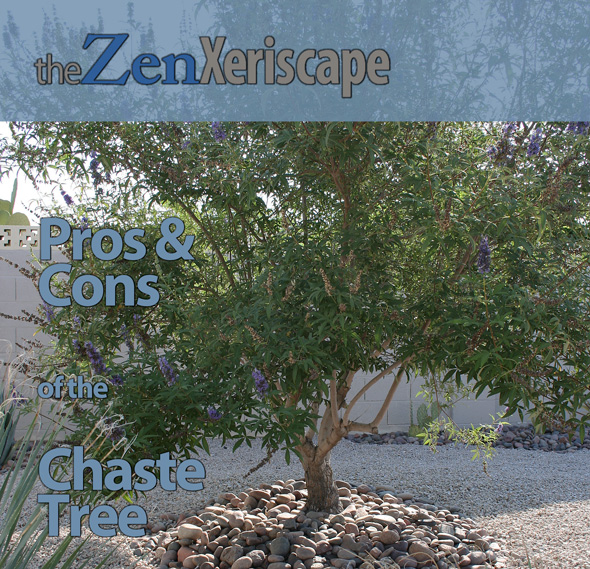
The beautiful chaste tree (Vitex agnus-castus) produces lovely clusters of flowers along with greenish-blue-gray, compound leaflets that are fragrant when handled. However, during the late fall, winter, and very early spring, this tree might actually lose its leaves. In fact, the chaste tree is deciduous.
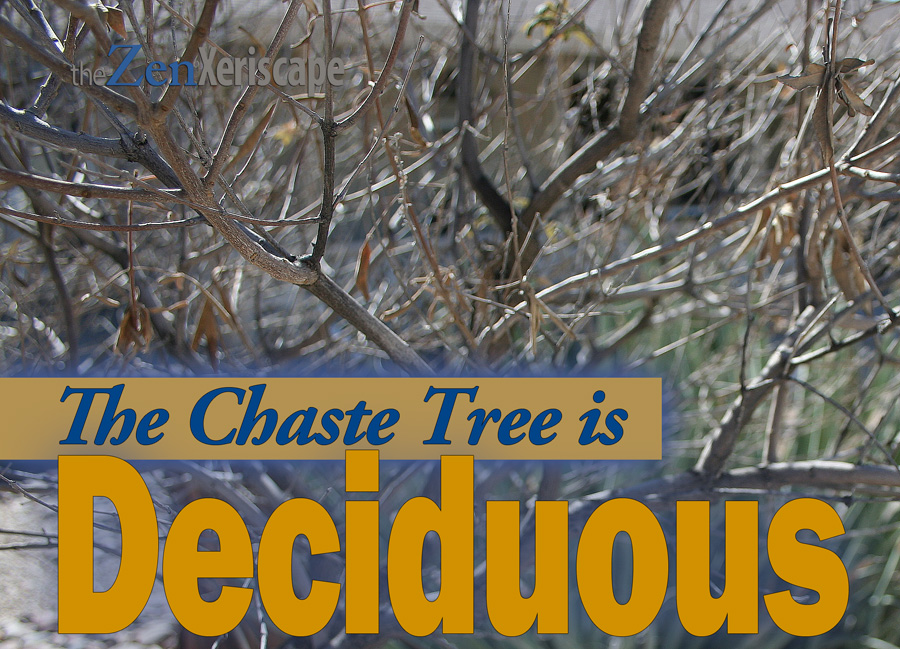
the beautiful chaste tree (Vitex agnus-castus)
goes dormant and loses its leaves.
Photo by Doug Martin
The Chaste tree is deciduous
What does deciduous mean?
When a tree or shrub is deciduous, it means that it goes dormant during the colder months in order to preserve energy.
Signs of a dormant tree
—Leaves change color, dry out, and drop to the ground
Signs of dormancy in a tree or other plant include shedding or dropping its leaves. Or, the leaves might first change color, and then the leaves will dry out and drop from the plant.
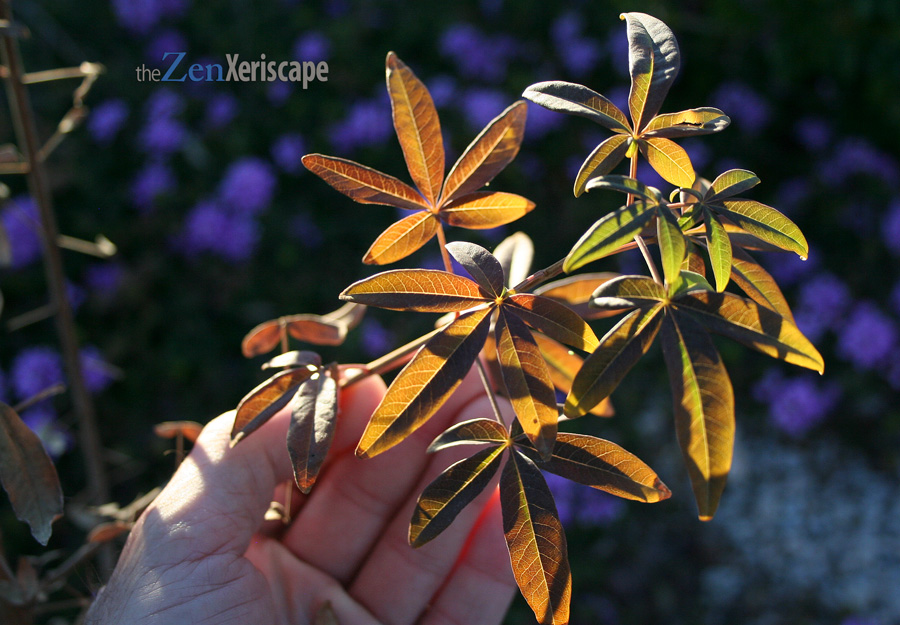
change color, then dry out, then drop off.
Above is a chaste tree with pretty
purple leaves—it is dormant.
Photo by Doug Martin
—The tree stops growing
In addition to shedding leaves, trees will stop growing. They will stop producing new buds, and discontinue growing new branches.
When do trees and shrubs go dormant?
—Colder temps and less daylight
Dormancy normally occurs during the colder months of the year. Coinciding with the colder weather in winter are also shorter hours of daylight. When there is less sunshine to produce chlorophyll, the plant goes dormant to preserve energy.
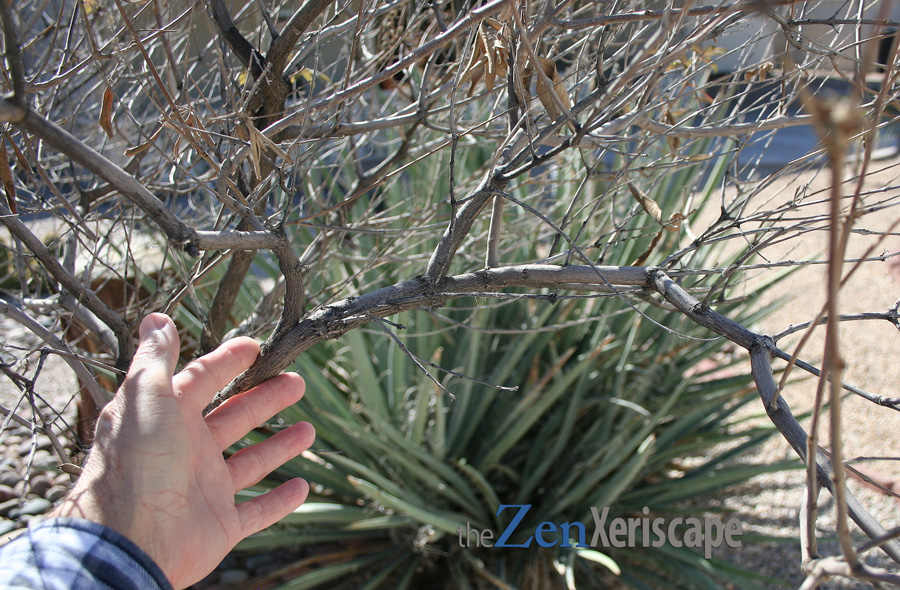
The leaves changed color (a pretty but muted purple),
then dried out, and then dropped off the tree.
Photo by Doug Martin
When do trees emerge from dormancy?
Trees emerge from dormancy in the spring, when the hours of daylight get longer, the plant, or chaste tree in this case, comes back to life. Once again, it will sprout new leaf buds, and begin the process of growth.
When does the Chaste tree go dormant?
In general, the chaste tree will go dormant when nighttime temperatures become colder, and when the hours of daylight are reduced. So, the chaste tree will go dormant in the fall, winter, and early spring, depending on your hardiness zone.
—Hardiness zones
The chaste tree will survive as a perennial plant if you live in the USDA hardiness zones of 6-to-11. Yes, it is a very adaptable plant, and can survive a wide range of temperature fluctuations.
However, if you live in hardiness zone 6, it’s probable that your chaste tree will die back to the roots during the winter. Fortunately, this tree should emerge in the spring, and quickly grow back to 5-or-6 feet, depending on the variety. To be safer in zone 6, mulch around the base of your chaste tree in winter.
—Chaste tree thrives in extreme heat
Here in southern Arizona, my chaste trees have survived 120 degrees (or even a little hotter) without a sign of stress and without a problem.
—Chaste tree survives single digit winter temps
In addition, my chaste tree has survived winter low temperatures into the single digits. Of course, they went dormant and dropped their leaves during those extreme lows.
But, next spring, they bounced back quickly. Longer hours of sunlight and warmer temps really spurred new buds and plant growth.
When is the Chaste tree deciduous?
—Dormancy triggers deciduous behavior
Well, the Chaste tree stops growing and drops its leaves when it becomes dormant (see above).
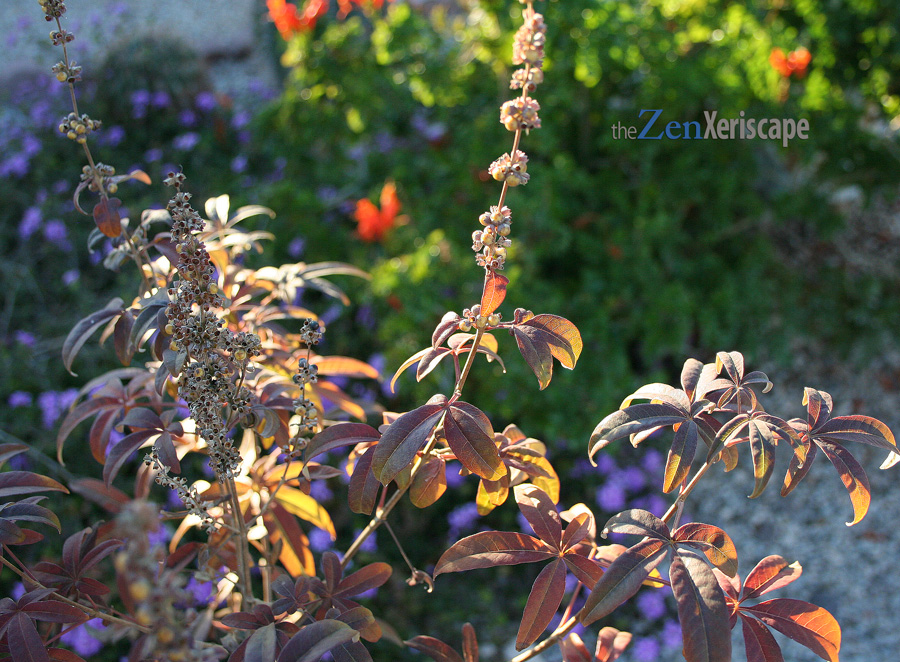
changed color, and soon will dry out.
See the orange jubilee and trailing lantana
in the background.
Photo by Doug Martin
—Leaves change color
Here in southern Arizona, my chaste trees leaves turned a rich red-purple hue in December. Of course, they aren’t as boisteriously colorful as a maple tree, but they are still attractive, especially in an arid landscape.
However, if you live in other hardiness zones, the leaves on your chaste trees might be a little more colorful, depending on the variety and the microclimatic conditions locally.
—Leaves dry up and drop to the ground
Like many deciduous trees, the leaves of the chaste tree also dry out and eventually drop to the ground. That also happens in my case here in Phoenix, Arizona. The process of dried-out leaves started in December.
However, some of the purple leaves stay attached and don’t drop. But, they are fragile during dormancy, and would drop if I just brushed against them.
—New growth stops
During dormancy, just like with all deciduous trees, my chaste trees stop growing. Amazingly, despite the dormancy, my chaste trees still shows some new growth around the base of the plant.
However, I believe that’s only because we have had a very warm winter, and temperatures have not yet dipped below freezing. Depending on your local climatic conditions, your chaste tree might behave a little differently during its dormancy.
More information about the chaste tree
If you’re interesting in having the chaste tree in your arid landscape, read more about this fantastic plant. Read the Pros and Cons of the Chaste Tree, and How to Prune the Chaste Tree for more information!
TAKEAWAYS:
Chaste tree is deciduous
Dormancy causes deciduous behavior
When chaste trees go dormant, they drop their leaves. That’s why they’re called a deciduous tree.
If you’re in a climate with warmer winter temps (like I am), they might not drop all the leaves. Your experience might differ depending on your hardiness zone.
Deciduous trees store energy
When the hours of daylight are less, and the temperatures drop, the chaste tree drops its leaves and stops growing in order to conserve energy.
In the spring, the chaste tree (a deciduous tree) will use that stored energy to sprout new buds and new growth!
Thanks for reading our Chaste tree is deciduous post! If you have the chaste tree in your landscape, please share your experiences in the comment section below.
Content and photos by Doug Martin and The Zen Xeriscape