A few years ago, I bought a 2-foot high Cereus Peruvianus Monstrose cactus. The local garden nursery had it labeled as Cereus “monster cactus” “Montrosa”. No matter the spelling, the Monstrose cactus has a unique, contorted look, and can grow to monstrous proportions. Here are our Cereus Peruvianus Monstrose cactus care suggestions, and the Monstrose cactus description.
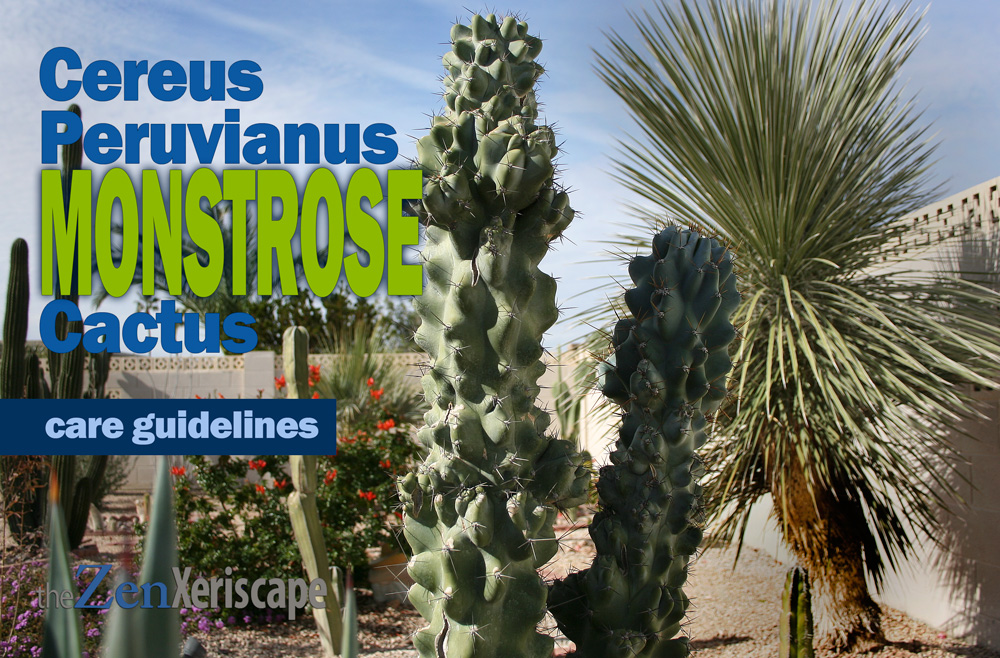
has twisted ribs and knobby protrusions
that creates a large, captivating focal point.
Photo by Doug Martin
Cereus Peruvianus Monstrose cactus care
Cereus Peruvianus Monstrose cactus description
Columnar cactus:
The Cereus Peruvianus Monstrose cactus is a unique-looking columnar cactus. Instead of having mostly straight columns like the Organ Pipe Cactus, the Monstrose cactus has stems that are contorted and knobby.
Generally, the columns do grow upright, but as they grow, they have an architecturally sculptured look. Their knobby appearance, with their twisted ribs and protrusions, can make this cactus a distinctive focal point in an arid landscape.
Cereus Peruvianus Monstrose cactus can get large:
—Height
As the name implies, this columnar cactus can grow to monstrously large proportions. Around the suburban Phoenix, Arizona area, I have seen this plant reaching over 15 feet tall and 5 feet wide. They can get massive!
—Width
As the cactus continues to grow, new arms will emerge around the base of the plant and midway up the columns. As the years go by, and new arms continue to emerge and grow, this cactus can easily get 4-to-5 feet wide (more more).
Hot and cold tolerant:
Generally, this cactus will be perennial in USDA hardiness zones of 9-to-11. Here in Phoenix, Arizona, I believe I’m in the 9b or 10a hardiness zone.
In my experience, the Monstrose cactus can survive temperatures as low as the mid 20’s without any damage to the column tips. And, I have never protected this cactus during any winter low temps.
During the summer, this hardy cactus has survived sweltering temps over 120 degrees F. Despite the extreme heat, my monstrose has exhibited no signs of heat stress.
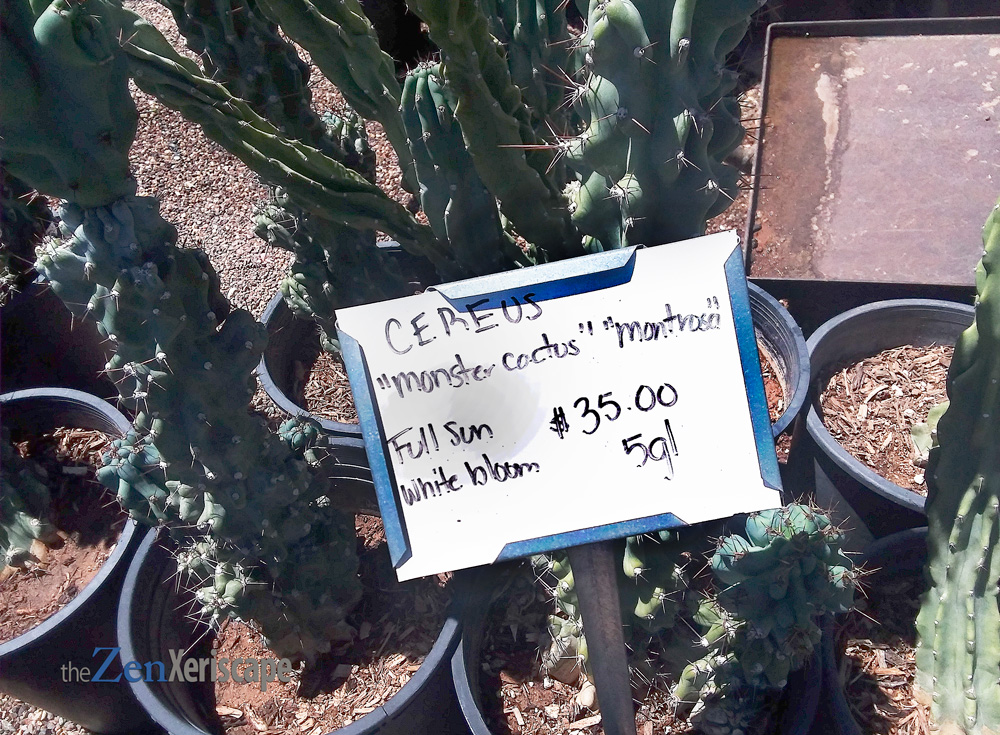
might be labeled with different names,
you’ll get the same incredible results
in your landscape.
Photo by Doug Martin
Monstrose cactus flowers:
The Monstrose cactus flowers are very similar to the flowers on the Peruvian apple cactus. They are large and white, with gradations of pink and purple around the area where the flower petals emerge.
Fruit:
In addition to having similar flowers as the Peruvian apple cactus, the fruit is also very similar. The fruits have a smaller apple-shape, and its pulp tastes zestily sweet.
Fantastic potted plant:
Because this cactus requires minimal care, you can grow it in a large pot or container. Just be sure is has holes for drainage.
It’s dynamically unique looks will spark admiring looks and conversation from your guests. And, since it is slow-growing, you can count on ten years or more of maintenance-free care.
Cereus Peruvianus Monstrose cactus care
How to plant and care for Cereus Peruvianus Monstrose cactus
Plant in a sunny location:
The Cereus Peruvianus Monstrose cactus requires at least 6 hours of sun. Fortunately, it does tolerate some shade, especially in the afternoon.
If you’re growing your impressive Monstrose cactus in a pot, be sure to rotate it periodically so the entire plant receives sunlight. Or, you can take the container outside during the warmer months, and move it around your exterior living space.
Requires well-draining soil:
Just like almost all cactus plants, this Monstrose cactus requires soil that drains well. To make it more drainable, amend clay-based caliche soil with some organic garden soil and a small percentage of perlite (or sand).
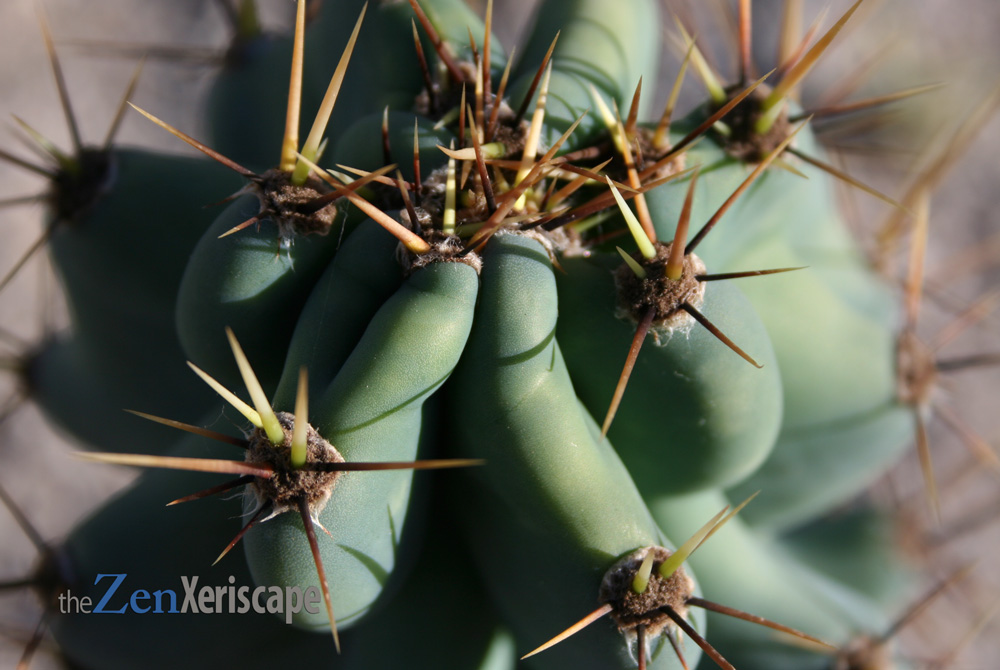
sharp spines. Wear thorn-proof garden gloves
when handling or pruning.
Photo by Doug Martin
Water deeply, but infrequently:
Add water only when the soil has completely dried out. Then, wait a few more days before deeply watering.
In my case, I water my Monstrose cactus deeply, once-a-week in the summer, and every two-to-four weeks in the winter. But, I always let the soil dry out completely.
Fertilize:
I have never fertilized my slow-growing Monstrose cactus. However, you might apply a balanced, 5-5-5 or 10-10-15 fertilizer just before the growing season begins in the spring.
Extra fertilizer should spur faster growth, and possibly more abundant flower and fruit production.
Prune:
This cactus is slow-growing, but eventually you might have to prune the arms of this potentially mammoth cactus. Personally, I like to prune the arms off when they emerge around the base.
To prune the new emerging columns, you can use a hand pruning saw. This tool will allow you to quickly prune its new columnar arms.
However, if you don’t want to, you do not have to prune this cactus at all. Let it grow naturally, and in a few decades, you will have an impressively large cactus—it will look amazing.
Just be sure you have enough space to let this grow!
How to propagate the Monstrose cactus:
If you have a mature Monstrose that produced fruit, you might have fun by harvesting and drying the seeds. Then, grow your own monstrous Monstrose from its tiny seeds.
—Propagate from cuttings
Or, you can cut an arm of two off your mature Monstrose and replant it. Many gardening experts advise letting the fleshy part of the cutting completely callous before planting.
However, I had the best luck by planting fresh cactus cuttings directly in the dry soil before it had a chance to callous. The cutting produced more abundant roots much faster that way.
The one risk of planting a cactus cutting immediately is that it might develop root rot. To prevent rotting, I make sure the soil drains well and dries completely before I add moderate water. I have had almost a 100% success-rate by planting my cactus cuttings before the flesh had developed a hard callous.
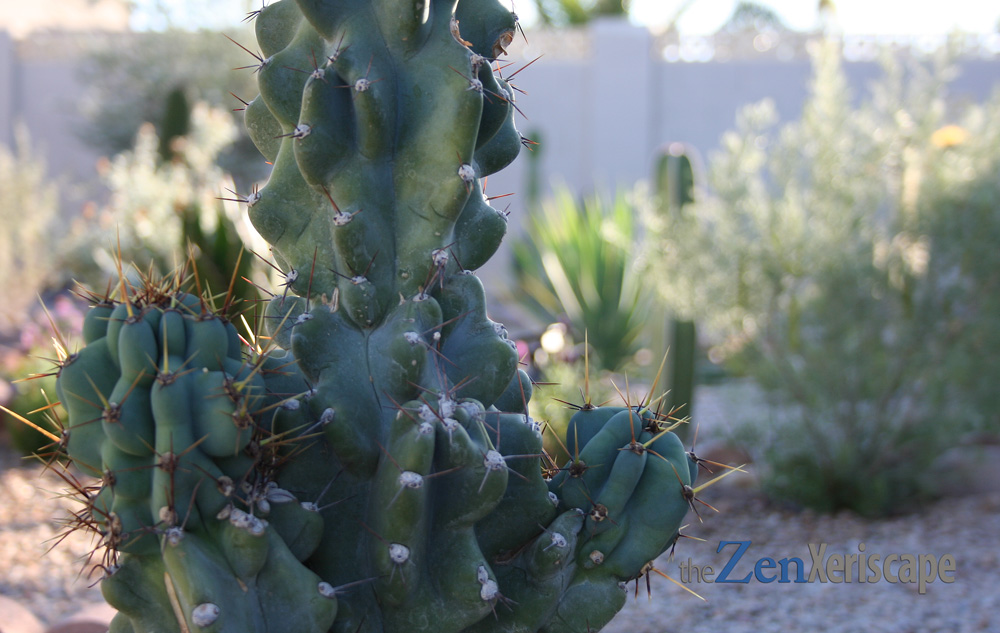
many arms over the years. As it grows,
it gets taller and wider!
Photo by Doug Martin
TAKEAWAYS:
Cereus Peruvianus Monstrose cactus care
Can be grown potted or in the landscape:
The Cereus Peruvianus Monstrose cactus is a wonderful addition to any arid landscape. Or, grow it in a container for an easy-maintenance, but dynamic-looking indoor plant.
Minimal maintenance:
This slow-growing cactus requires minimum maintenance. In addition, the Monstrose cactus is hardy, and can survive extremely hot summer temps. Plus, it has survived temps that dipped into the low 20’s during the winter in my xeriscape.
Stunning appearance:
However, the most stunning attribute of this cactus is its unique, twisted, columnar appearance. As it grows, it will attract more-and-more attention.
Cereus Peruvianus Monstrose as a focal point:
Because of this sculptural appearance and eventual large size, this cactus can become an attractive focal point in your arid landscape.
Thanks for reading our Cereus Peruvianus Monstrose cactus care guidelines. If you’ve grown this cactus in your landscape, or in a pot indoors, please share your experiences in the comments section below!
Content and photos by Doug Martin and The Zen Xeriscape