Years ago, when I bought a house in Las Cruces, New Mexico, I was lucky to have a few Texas Purple Sages. Two of them were framing the front entrance of my adobe home. During the next monsoon season, those bushes illuminated the front of my house with iridescent purple blooms. They looked wonderful. And now, here’s all about Texas Purple Sage.
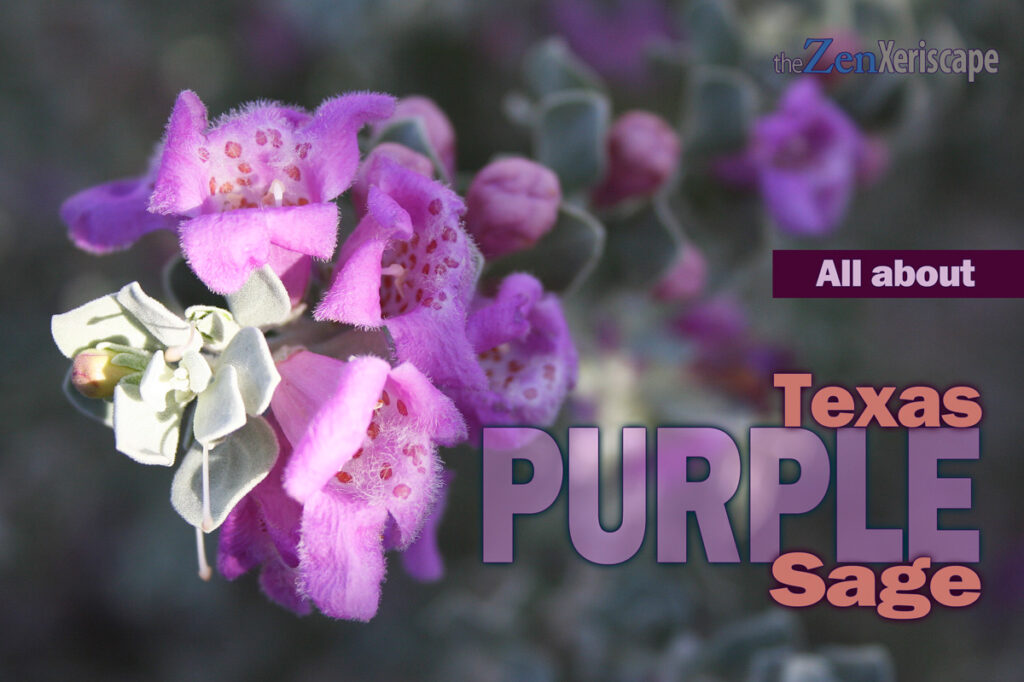
plant. It is heat- and drought-tolerant,
so it’s perfect for your arid landscape.
And, don’t forget the beautiful flowers!
Photo by Doug Martin
All about Texas Purple Sage
Texas Purple Sage is also known as Texas Barometer Bush
The monsoonal rains and humidity in the air seem to stimulate the dense flower blooms on most varieties of Texas Sage. That is why, at least in Texas, the Purple Sage is also known as a Texas Barometer Bush.
Texas Sage has many hybrid varieties
Surprisingly, there are so many hybrid varieties of the purple flowering Texas Sage that I am not really sure what variety I am looking at.
Which hybrid variety do I have?
For instance, in my landscape I have what I think is a Purple Texas Sage. However, I saw it sprouting under my White Cloud Texas Sage. So, after it was a few inches tall, I gently pulled it out of the ground, making sure that the taproot came with the plant.
Then, I transplanted what I thought would be a baby White Cloud Sage a few feet away. A year later, I was surprised to see the first flush of purple flowers covering the fast-growing, 3-foot tall bush.
Regardless, I do not know which hybrid varieties of Texas Sage I currently have throughout my landscape. However, I do know for sure that I have a White Cloud Texas Sage (Leucophyllum frutescens ‘White Cloud’).
Heavenly Cloud Texas Sage
As far as my other purple Texas Sages, I suspect I have had Heavenly Cloud Texas Sages (Leucophyllum frutescens ‘Heavenly Cloud’). That was one of the most common hybrid varieties sold at the local garden nurseries, and my sages fit their description.
Either way, they all had the same botanical name of Leucophyllum frutescens.
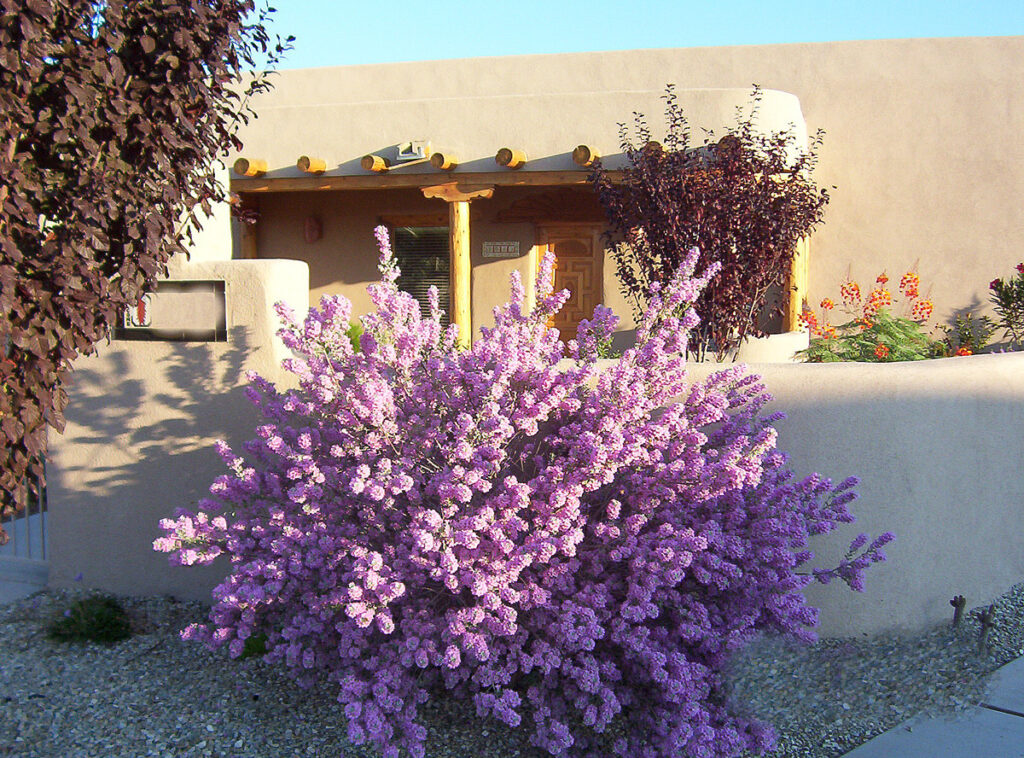
of my house in southern New Mexico,
about 20 years ago.
Photo by Doug Martin
All about Texas Purple Sage
Characteristics of the Texas Purple Sage (Leucophyllum frutescens):
Typical Size:
The height can range from 4 to 6 feet, with a comparable width.
Flowers:
—Clouds of color
Flowers are small, and it seems like there are clusters (or clouds) of flowers on one branch. During the monsoon season, this bush will be covered with thousands of beautiful, small flowers, all clustered together to create the illusion of a cloud of color!
Many hybrid varieties of Texas Sage:
Many varieties of Texas Purple Sage, Texas Ranger, Texas Silverleaf, and Cenizo will grow naturally in the Texas countryside. Their range also extends into northern Mexico.
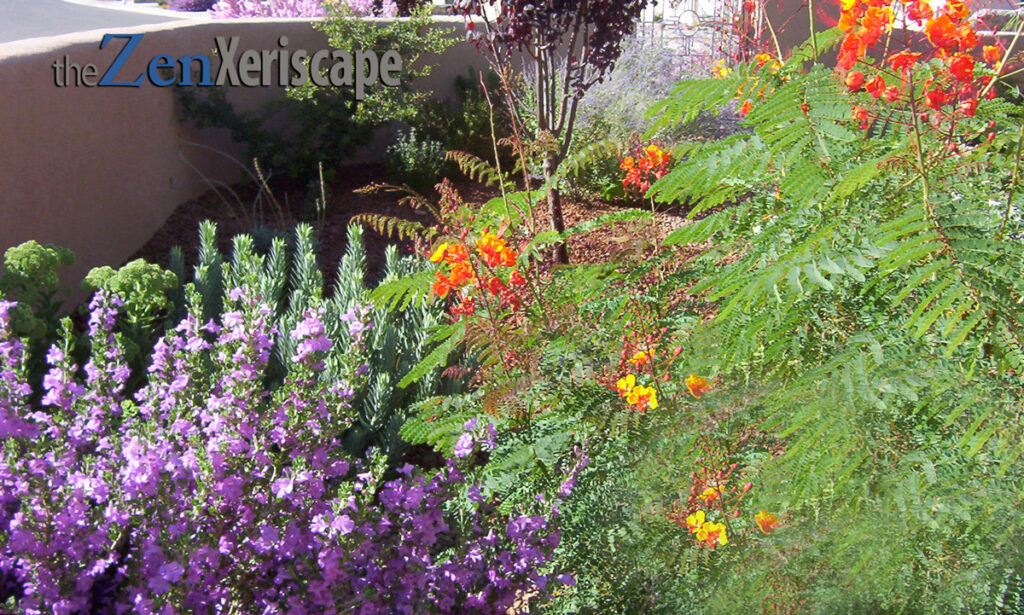
I had placed next to a Mexican
Red Bird of Paradise, along with
other xeriscape plants in New Mexico.
Photo by Doug Martin
Drought- and heat-tolerant:
All hybrid varieties of Texas Sages are drought-tolerant and love the summer heat. Otherwise, without that tolerance of intense summer heat, they would never survive in the Texas countryside.
Fortunately, those hardy characteristics also make the Texas Purple Sage, or Cenizo, an excellent plant for a xeriscape, rock garden, or any arid landscape.
—Hardiness zones of 8-to-11
The Texas Purple Sage is hardy, and should survive as a perennial when planted outdoors in USDA hardiness zones of 8-to-11. I’ve grown this plant in high-altitude Las Cruces, New Mexico, and there my beautiful Texas Sages survived single digit nighttime temperatures.
And, now that I’m living near Phoenix, Arizona, I’ve found that my Texas Purple Sages and White Cloud Texas Sages have survived summer temperatures of 120 degrees F. So, this plant can definitely survive a wide range of extreme temps.
Bees love to pollinate this shrub’s flowers:
Bees and other pollinators are especially attracted to the Texas Purple Sage. They are so preoccupied with their job of feasting on the nectar and collecting pollen, that they ignore me when I am taking photos only inches away. I have also seen hummingbirds attracted to this shrub.
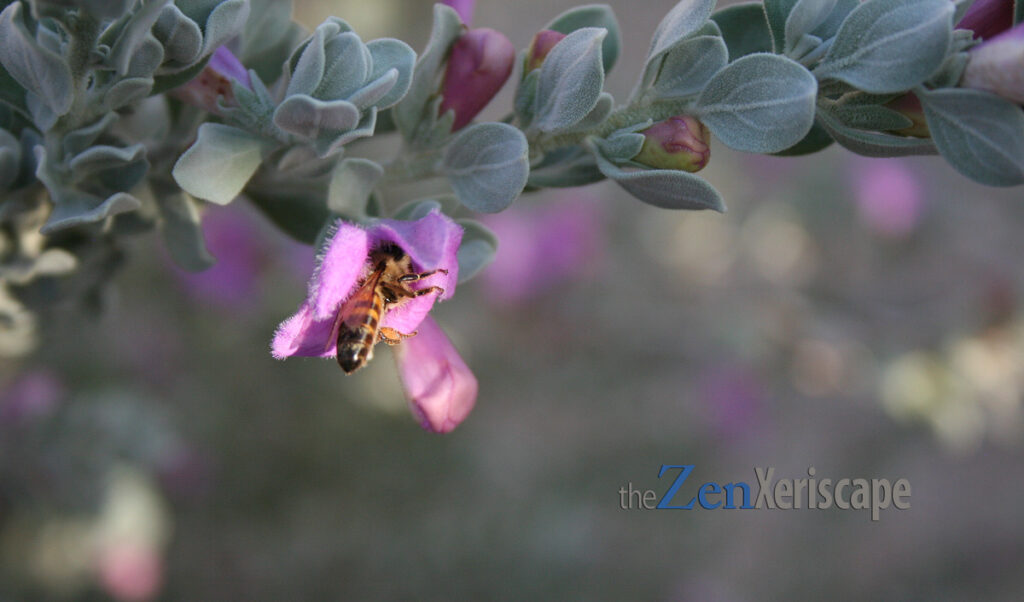
of pollinators, including this eager bee.
Photo by Doug Martin
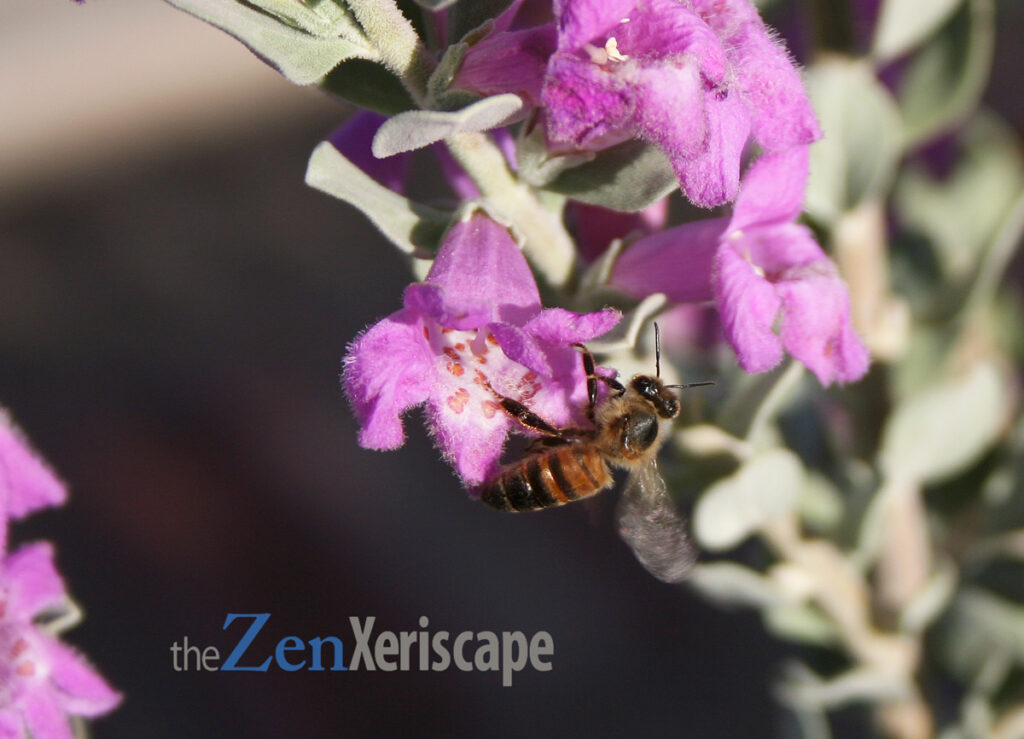
Texas Sage flowers.
Photo by Doug Martin
Mostly evergreen, depending on location:
My Texas Sages in Arizona appear to be evergreen, but a cold winter night will make it drop some leaves. This plant also seems to go dormant during the shorter days of winter.
However, the dormancy of Texas Sages does not last very long in the southwestern United States. Once warmer temperatures arrive, this plant will come back to life with new growth.
Well-draining soil:
It is best to plant this shrub in soil that drains well. Of course, that’s true for most plants that thrive in low-water xeriscapes.
During the hot summer months, I water my White Cloud and Texas Purple Sages twice a week. However, they would survive with even less water during the summer. In the winter, I try to cut back to once a week or once every other week.
No fertilizer:
I have never fertilized any of my Texas Sages. That makes sense because they grow naturally in the barren, arid habitat of the Texas countryside. Even without fertilizer, my Purple Texas Sages have been stellar performers, with vigorous new growth and spontaneous, bountiful flowers.
However, a light application of a balanced fertilizer in the spring might stimulate fuller growth, especially when combined with a regular pruning program.
Pruning:
In general, all Texas Sages benefit from regular pruning. Otherwise, they can become rangy in their growth habit. For me, that untamed look feels natural in my landscape.
But, regular pruning of this shrub will also promote fuller growth, along with a more abundant display of flowers.
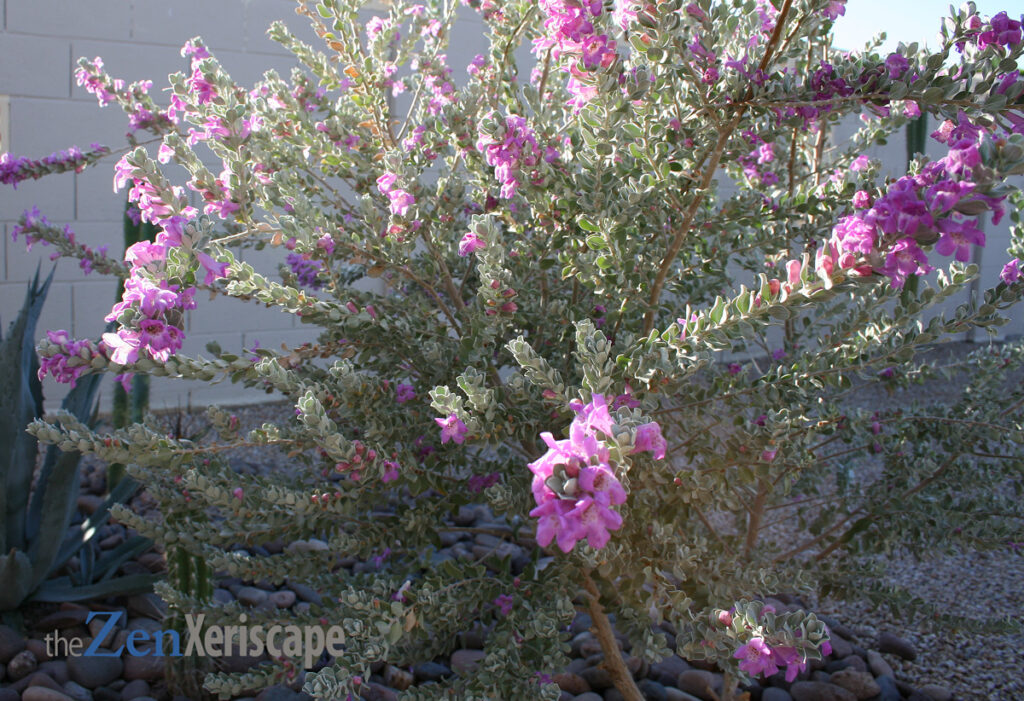
a ‘rangy’ growth habit. By pruning regularly,
this shrub would have fuller growth
and more abundant flower display.
Photo by Doug Martin
All about Texas Purple Sage
This shrub is easy to grow
—Does well in rock gardens and arid landscapes
The Texas Purple Sage, and all the other hybrid varieties of this shrub, are some of the easiest plants in the world to grow and keep alive. It is a great beginner plant, and looks good in rock gardens, arid landscapes surrounding your home, or in backyard outdoor living spaces.
Thank you for reading ‘All about Texas Purple Sage.’ If you try one of these drought-tolerant shrubs in your landscape or in a pot, you will be happy with the results! Let us know your experiences with your Texas Sage in the comments section below. Thank you!
Content and photos by Doug Martin and The Zen Xeriscape