I first grew a Desert Senna (Senna nemophila) shrub when I had lived in southern New Mexico. There, it survived cold and hot temperatures, along with drought conditions. Through all the climatic extremes, the Desert Senna rewarded me with bright yellow flowers that covered the shrub throughout the year. Here is our Desert Senna shrub description and Desert Senna care guidelines.
Today, I live in Phoenix, Arizona, where we experience extremely hot summer temperatures. Fortunately, my Desert Senna shrubs thrive in the heat, and seem to enjoy the blazing southwestern sun.
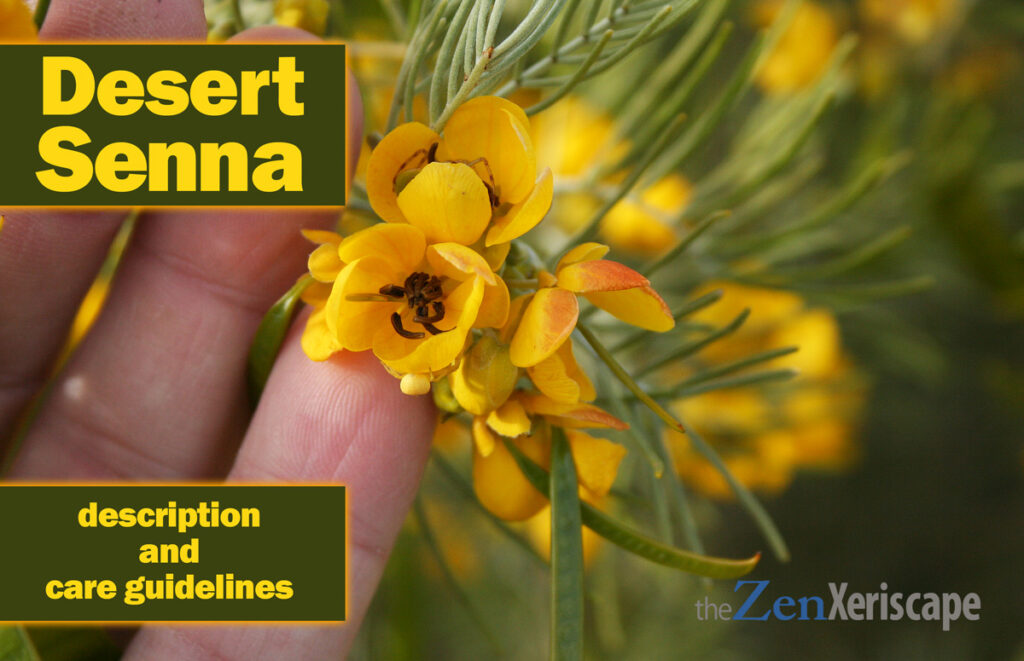
and can survive wide temperature extremes.
Plus, it has pretty flowers and foliage.
Photo by Doug Martin
Different names for the Desert Senna
If you’re searching for a Desert Senna, it might be listed with different names. For instance, I often see these hardy shrubs marketed as Desert Cassia. In addition, the Desert Senna might also be labeled as a Senna nemophila or as a Cassia nemophila. Whatever the name you see on the pot or container, I’d urge you to try this plant in your arid landscape.
Desert Senna shrub description
Foliage:
Leaves get one to two inches long, but are very narrow and almost like a needle. Depending on the angle of the sunlight, the leaves have a bright green color, with a slightly blue or silver hue. From a distance, the thin, needle-like and fleshy leaves of this shrub make it look feathery and magical.
Flowers:
These plants are a member of the legume family, and their beautiful flowers look exactly like the flowers on a pea plant. They are yellow, and about 1/2-to-3/4 inches wide and round. The flowers last for what seems like weeks. Then, a small green seed pod develops.
Seed pods:
Eventually, the seed pod will grow to about 1-or-2 inches long. Soon, the green, fleshy seed pod will dry out and take on a dry-looking, brown-to-black color. I love how the bush looks at this stage. However, many people like to pull the beans, or even shear the whole plant.
Many years ago, I did something stupid—I tried eating the green seed pods. To me, they looked appealing, but they tasted horrible. I had to spit it out. I’m fortunate that they weren’t toxic (in small quantities).
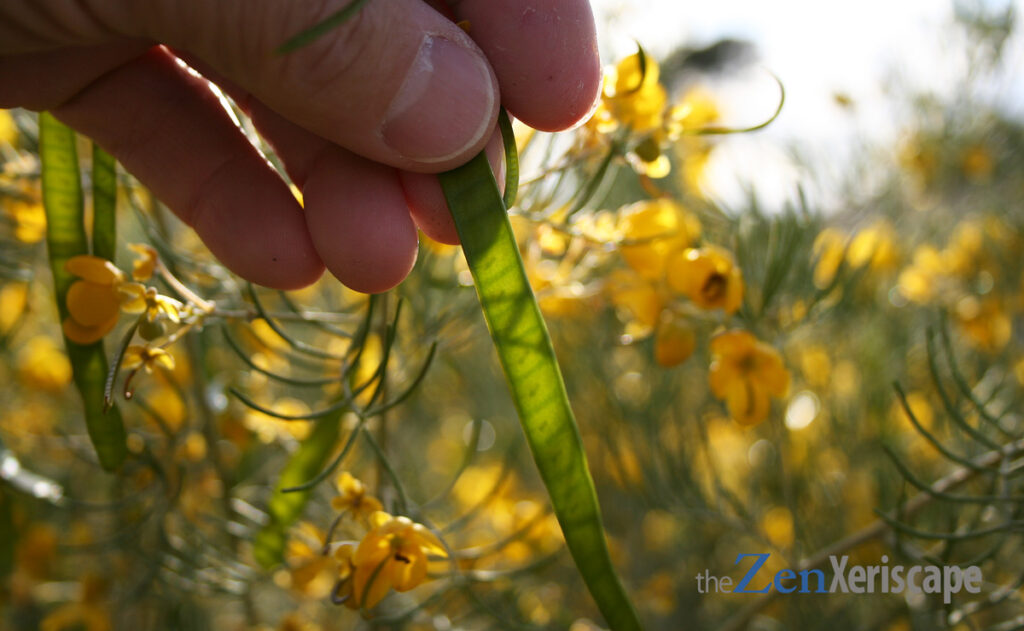
just beginning to form in their own
convenient compartment.
Photo by Doug Martin
Growth habit:
The Desert Senna shrub has woody stems that emerge around the base of the plant. It can be a fast growing shrub, with a mostly rounded growth habit.
Depending on your landscape, and the look you’re going for, you can keep it’s rounded shape precisely pruned. In my case, I prune this shrub after it has produced it beans. I don’t prune it precisely, but keep it in a rounded, but tufted, shaggy form.
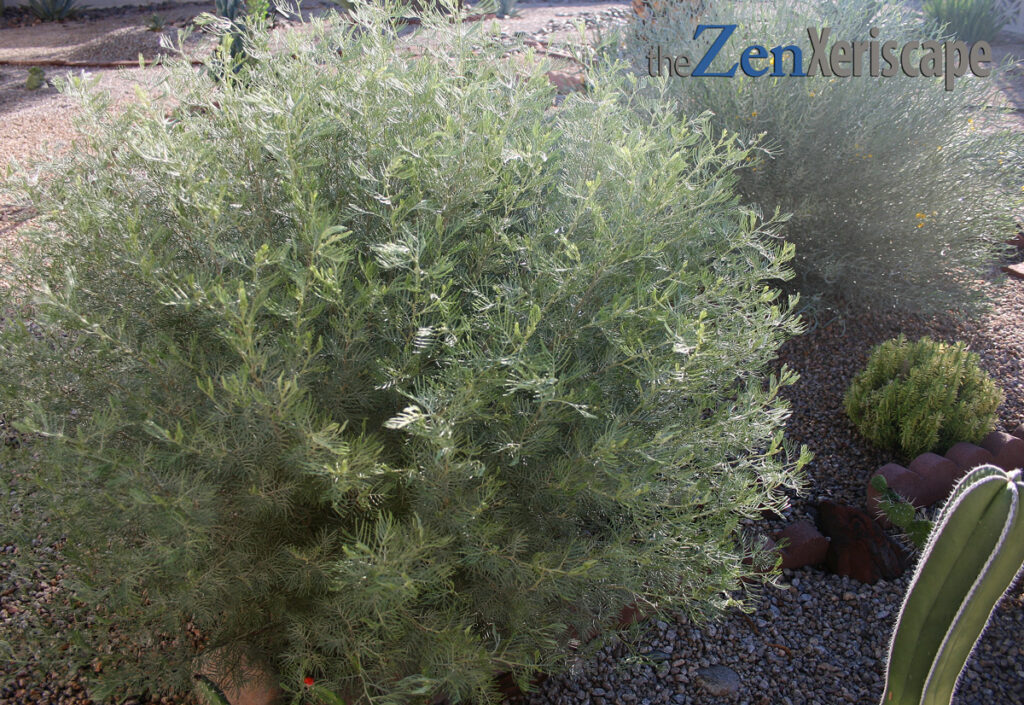
rounded growth habit. In the back
and to the right, there is a
Silver Senna with similar growth.
Photo by Doug Martin
Desert Senna shrub care guidelines
Water requirements:
The Desert Senna, or Desert Cassia, is drought-tolerant and can subsist on only a little water. However, I have found that this shrub is also tolerant of lots of water. In fact, extra moisture can spur new, faster growth on this bush.
Currently, I am watering my young Desert Cassia once a week. Of course, newly planted shrubs might require more water until their roots are established.
Once established, let the soil dry out completely in between waterings.
—Tolerant of more water, too
Because the Desert Senna is tolerant of overwatering, this plant should do well in the southeastern United States, where more abundant rainfall is typical. The one caveat is to not plant this shrub in standing water—the soil should drain well.
Soil requirements:
This drought-tolerant, tough plant is tolerant of a wide variety of soils. The biggest soil requirement is that it is well-draining. It is never a good idea to let a drought-tolerant plant sit in water-soaked soil.
Hardiness zones:
Remarkably, the Desert Senna is hardy down to 15 degrees Fahrenheit. Colder temperatures might damage the foliage and branches, but the base and roots of the plant might survive. If your Desert Senna looks like it was killed by cold temperatures, don’t give up hope. By spring, it might sprout new growth from its base, and then grow back quickly.
This bush grows best in USDA hardiness zones of 8b to 11. In my experience, even colder USDA hardiness zones might work, too. I’m guessing that even in a hardiness zone of 7, this shrub could still be a perennial plant.
Of course, if you live in the southwestern United States, this bush will be a perennial. Even wetter southeastern states might not be too wet for this drought-tolerant bush. While I have killed a few drought-tolerant plants with too much water, I have never killed a Desert Senna.
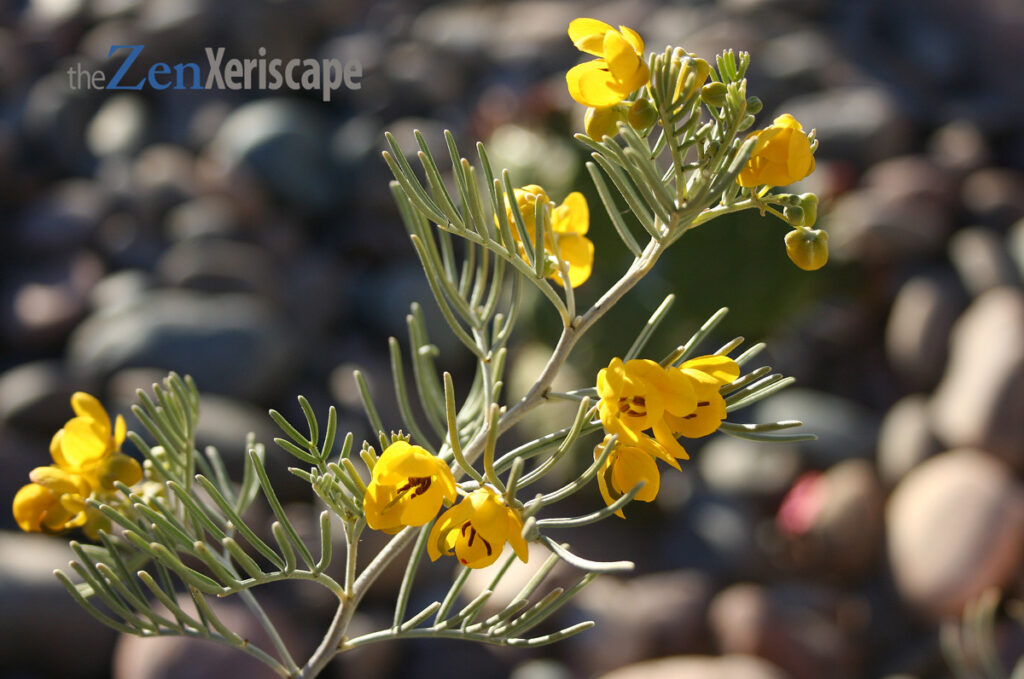
thin and lush shape to dissipate heat.
Photo by Doug Martin
Desert Senna shrub pruning:
Around Phoenix, Arizona, I see Desert Sennas planted in many public common areas—they look great! Some communities shear their Senna shrubs when the beans begin to form. To save landscaping time, their gardeners use power tools to shear them into a tight, round ball.
Personally, I don’t like the tight, round, symmetrical type of pruning that some communities do in their common areas. Whichever pruning style you choose, it’s always a good idea to prune before the beans have dried out and turned brown.
—This shrub could become invasive
As the beans dry, they will drop off the branches and litter the ground below the shrub. There, they might reseed, or blow into another location and become invasive.
To save myself lots of time, I always prune this shrub before the beans have dried out.
—Prune in tight rounded shape, or not
In my own landscape, I prune the bushes to encourage new growth, but I don’t shape them into a tight, round ball. That symmetrical shape looks unnatural for this drought-tolerant plant. Instead, I prune with an open, looser form or shape (but still rounded). To me, the asymmetry evokes reminders of its tough desert origins in Australia.
Litter and clean up:
After the seed pods dry up and turn brown, they eventually drop off of the shrub. Since the shrub is covered with flowers, you will have just as many seed pods to clean up. Once the seed pods drop to the ground, they are a little difficult to clean up.
To save time, I always like to prune the branches before the seeds drop on the ground.
Desert Senna propagation:
—Propagation is easy
This shrub is incredibly easy to propagate. Just collect the seed pods after they start to turn brown. But, be sure to gather the seed pods before they have completely dried out.
Then, put the seed pops into an enclosed container, maybe with a screened lid to allow ventilation.
–Harvest baby Desert Senna sprouts
Once completely dry, the seed pods split open. This splitting force then propels the seeds into the air and around the ground. Later, they might germinate, and you’ll have a whole crop of baby Desert Sennas that you can replant.
Or, you can open the seed pods that you’ve collected, gather all the seeds, and plant them in the soil yourself. Keep the soil moist, and you should soon see little Desert Senna sprouts.
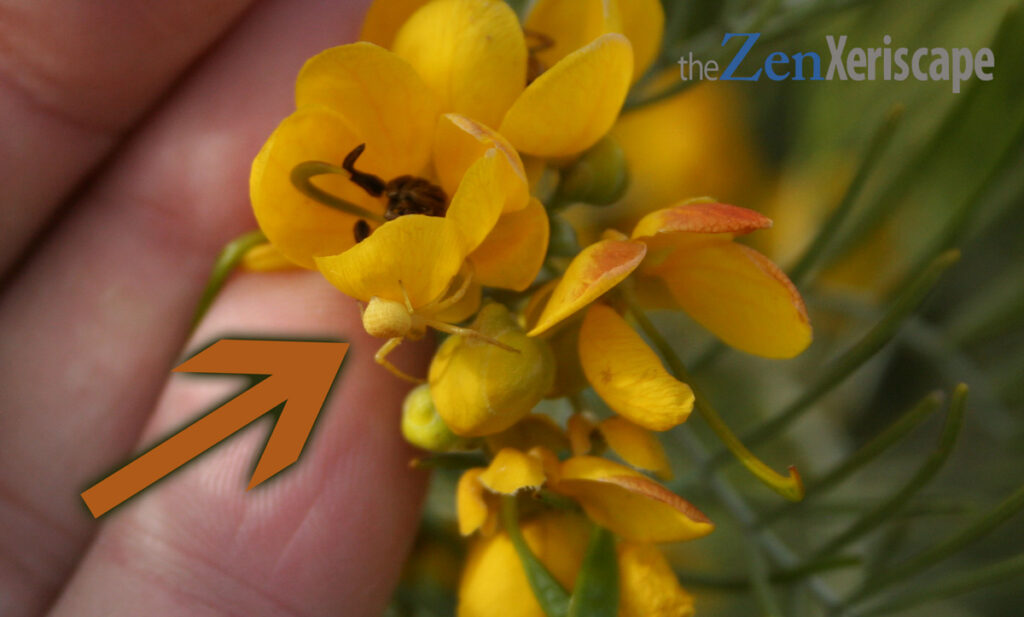
on the Desert Senna flower petal.
Photo by Doug Martin
TAKEAWAYS:
Desert Senna shrub description and care guidelines
—Drought-tolerant
The Desert Senna shrub, sometimes called the Desert Cassia, is a unique, drought-tolerant plant. It can survive long periods of dry weather. However, in your landscape, it will look better with a little supplemental irrigation.
—Bright yellow, long-lasting flowers
Bright yellow flowers cover the whole shrub and make it look like a vibrant yellow ball. Depending on your local growing zone, this shrub can flower throughout the year.
—Tolerant of extreme temperature ranges
This shrub can take below-freezing temperatures and blazing heat.
—Extremely easy plant to grow
For me, this is one of the easiest plants I’ve ever grown. I think you would enjoy your own Desert Senna in your arid landscape, xeriscape, or pot.
Thanks for reading our Desert Senna shrub description and care guidelines. And please, if you have experience growing this unique, beautiful shrub, please let us know in the comments section below. Thank you!
Content and photos by Doug Martin and The Zen Xeriscape